Introduction
Thinking about moving from a non-IT job into software development? Many professionals eventually realize that they want a career that offers more opportunities to learn, solve problems, work with technology, or grow professionally. The good news is that you don’t necessarily need a computer science degree to start a career in software development. What you do need is a clear learning path, consistent practice, practical experience, and the confidence to start from where you are. Changing careers can feel intimidating, especially when you see job descriptions filled with programming languages, frameworks, and technical requirements. But you don’t need to learn everything at once. With the right approach, you can gradually build the skills employers are looking for and make a successful transition into the IT industry.
Why Consider a Career in Software Development?
Software development has become an important part of almost every industry. Businesses need websites, mobile applications, software platforms, automation tools, and digital solutions to operate and grow. This creates opportunities for people with different educational and professional backgrounds.
A career in software development can offer:
- Opportunities to work across different industries
- Continuous learning and skill development
- Opportunities for remote and flexible work
- Diverse career paths
- Potential for long-term professional growth
- The ability to build practical and creative solutions
Your previous career isn’t necessarily a disadvantage. In fact, your existing experience can become an advantage.
For example, someone from finance may understand business and financial applications, while someone from marketing may bring strong communication and customer-focused thinking to a development team.
Step 1: Choose the Right Software Development Path
Software development is a broad field, so your first step should be choosing an area that matches your interests and goals.
Some popular options include:
Front-End Development
Front-end developers build the parts of websites and applications that users interact with.
Common technologies include HTML, CSS, JavaScript, and modern JavaScript frameworks.
Back-End Development
Back-end developers work behind the scenes with servers, databases, APIs, and application logic.
Popular technologies include Python, Java, PHP, C#, Node.js, and SQL.
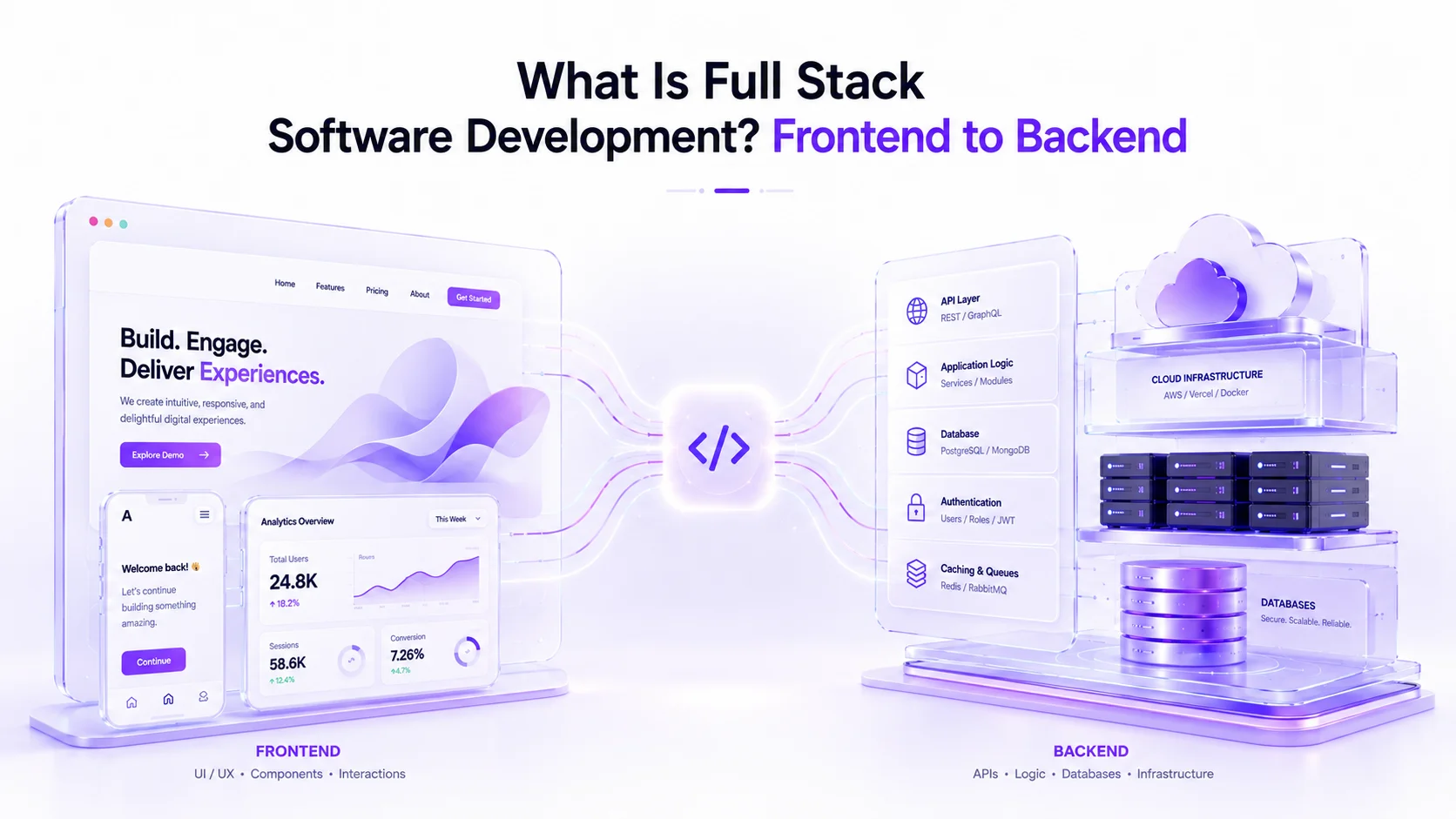
Full-Stack Development
Full-stack developers work with both front-end and back-end technologies. This can be a good option for learners who want a broader understanding of web application development.
Mobile App Development
If you’re interested in building smartphone applications, you can explore Android, iOS, or cross-platform development.
Choosing one direction initially prevents you from jumping between too many technologies and becoming overwhelmed.
Step 2: Learn the Programming Fundamentals
Once you’ve chosen your path, focus on programming fundamentals before trying to learn every popular framework.
Start with concepts such as:
- Variables and data types
- Conditional statements
- Loops
- Functions
- Arrays and data structures
- Object-oriented programming
- Error handling
- File handling
- Database fundamentals
- Basic algorithms
You can begin with one programming language instead of trying to learn several simultaneously.
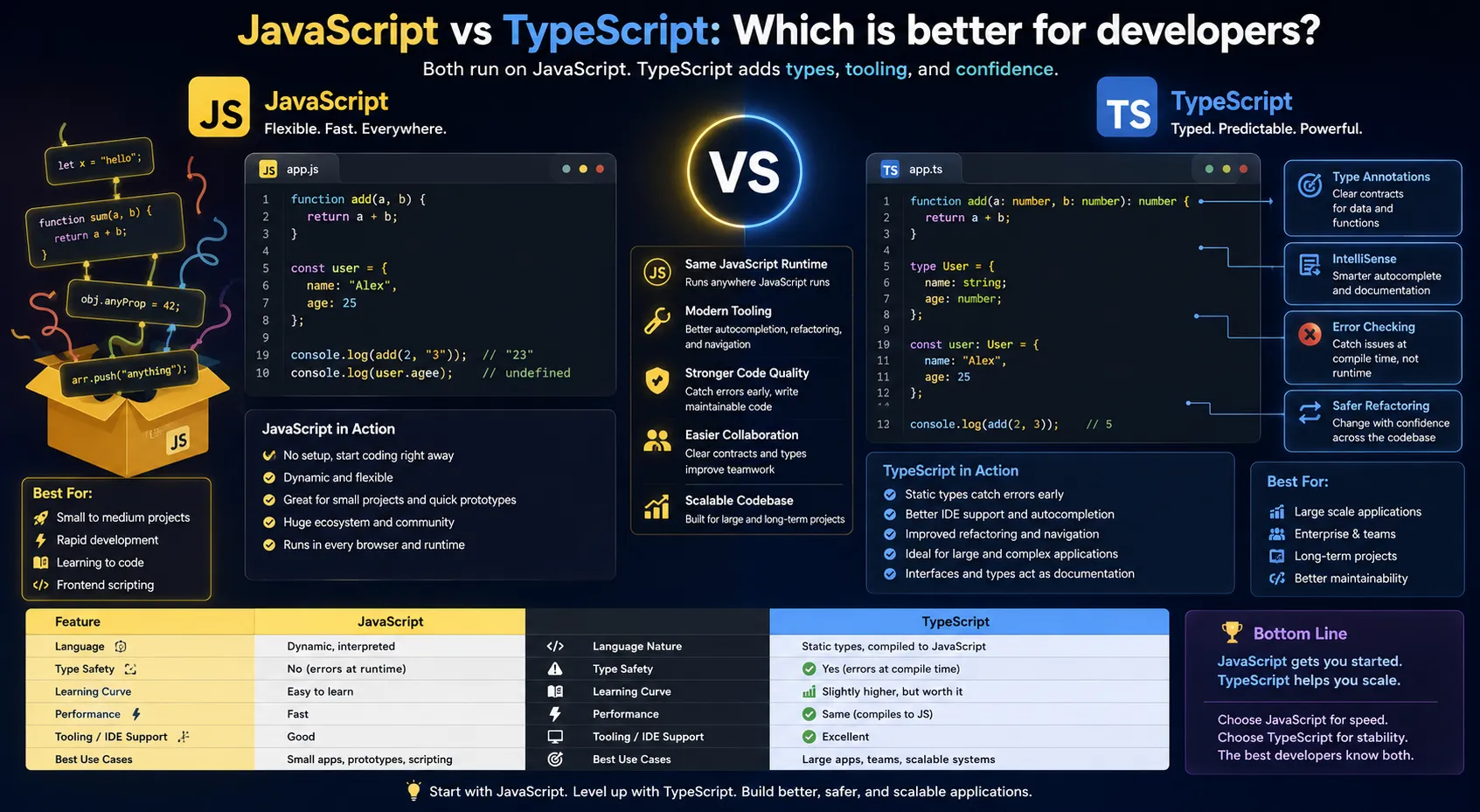
For example, Python is popular among beginners because its syntax is relatively easy to understand. JavaScript is an excellent starting point for people interested in web development.
The goal at this stage isn’t to memorize every command. It’s to understand how programming logic works and learn how to solve problems using code.
Step 3: Build Projects Instead of Only Watching Tutorials
Watching tutorials can help you understand concepts, but building projects teaches you how to actually use them.
Start with small projects such as:
- To-do list application
- Personal portfolio website
- Calculator
- Weather application
- Expense tracker
- Student management system
- Simple e-commerce website
- Blog application
As your skills improve, build more complex projects that demonstrate your ability to solve real-world problems.
Projects also give you something concrete to discuss during interviews. Instead of simply saying that you know a programming language, you can explain how you used it to build an application.
Step 4: Learn Git, Databases, and Development Tools
Programming isn’t only about writing code. Professional developers use several tools to build, test, and maintain applications.
Some essential skills include:
Git and Version Control
Git helps developers track code changes, collaborate with teams, and manage different versions of a project.
Databases
Learn the basics of databases and SQL. Understanding how applications store, retrieve, and manage information is essential for many development roles.
APIs
Learn how different applications communicate with one another through APIs. This becomes particularly useful when building modern web and mobile applications.
Development Environments
Become comfortable using an IDE or code editor, terminal commands, debugging tools, and package managers relevant to your chosen technology.
These skills help you move from learning programming to working like a professional developer.
Step 5: Create a Strong Portfolio and Resume
When you’re changing careers, your portfolio can help demonstrate your abilities even if you don’t have professional software development experience yet.
Your portfolio should include a few quality projects rather than dozens of unfinished ones.
- What problem the project solves
- Technologies used
- Your role in building it
- Important features
- Challenges you encountered
- How you solved those challenges
Your resume should also highlight transferable skills from your previous career. Communication, leadership, customer service, project management, analytical thinking, and problem-solving can all be valuable in software development.
Step 6: Gain Practical Experience
Getting your first development role can be the hardest part of the career transition. Look beyond traditional full-time positions.
- Internships
- Apprenticeships
- Freelance projects
- Volunteer development work
- Open-source contributions
- Personal projects
- Small business projects
Practical experience gives you a better understanding of how software is developed outside a learning environment. It also gives you examples that you can use when answering technical and behavioral interview questions.
Step 7: Prepare for Software Development Interviews
Technical interviews can feel challenging when you’re coming from a non-IT background, but preparation makes a huge difference.
Review:
- Programming fundamentals
- Data structures
- Algorithms
- Object-oriented programming
- SQL
- APIs
- Git
- Debugging
- Basic system design, depending on the role
Be prepared to explain why you are changing careers, what you’ve learned, what projects you’ve built, and how your previous professional experience can contribute to your new role.
A career change can actually make your story interesting. Show employers that you made a deliberate decision and have taken consistent steps to prepare.
Common Challenges When Switching to IT
Changing careers isn’t always easy. You may experience periods where progress feels slow or technical concepts seem difficult.
Some common challenges include:
Feeling Overwhelmed
There are countless programming languages, frameworks, and tools. Focus on the technologies required for your target role instead of trying to learn everything.
Lack of Professional Experience
Build projects and look for internships, freelance work, or practical opportunities to demonstrate your abilities.
Comparing Yourself With Others
Some developers may have started coding years earlier. Your journey doesn’t need to look like theirs. Focus on consistent improvement.
Balancing Work and Learning
If you’re currently employed, create a realistic study schedule. Even one or two focused hours each day can produce significant progress over time.
How Long Does It Take to Switch to Software Development?
There is no fixed timeline because it depends on your existing knowledge, learning schedule, chosen career path, and practical experience.
Someone studying consistently every day may progress faster than someone learning only occasionally.
Instead of focusing entirely on a deadline, focus on measurable milestones:
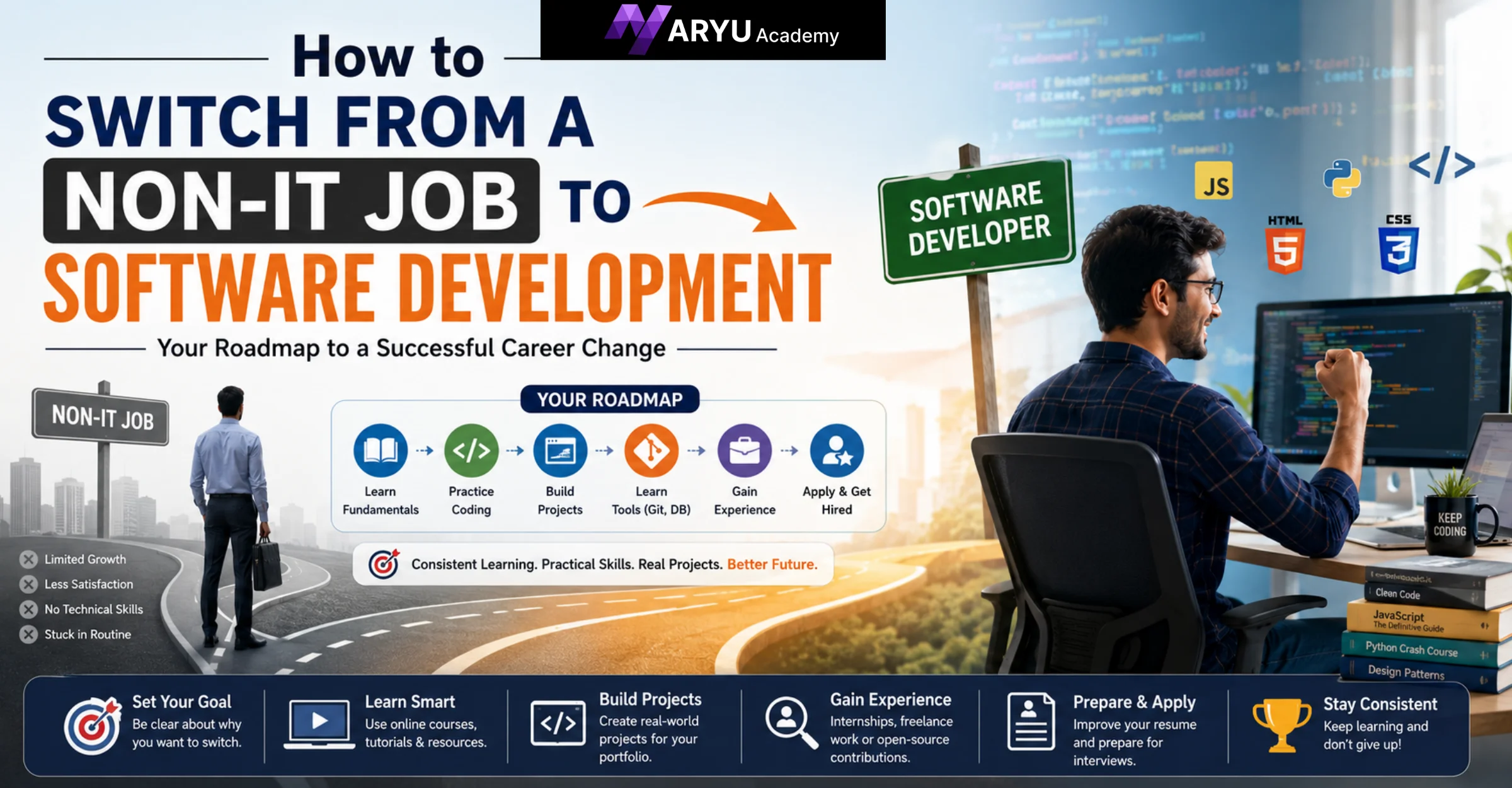
Learn → Practice → Build → Improve → Apply → Interview
Conclusion
Switching from a non-IT job to software development may seem like a major challenge, but it is absolutely possible with the right strategy and commitment. Start by choosing a specific development path, learn the fundamentals, practice consistently, and build real projects. Then strengthen your portfolio, gain practical experience, and prepare carefully for interviews. Most importantly, don’t let your previous career define what you can do next. Your existing professional experience, combined with new technical skills, can give you a unique perspective that employers value. You don’t have to become an expert overnight. Take the transition one skill, one project, and one step at a time. With consistent effort, your current non-IT experience can become the starting point for a rewarding career in software development.
Frequently Asked Questions
1. Can I become a software developer without an IT degree?
Yes. While a computer science or IT degree can be helpful, many employers also consider practical skills, projects, portfolios, and relevant experience when hiring developers.
2. Which programming language should I learn first?
It depends on your career goal. Python is a popular beginner-friendly option, while JavaScript is particularly useful for web development. Choose a language that aligns with the type of development you want to pursue.
3. How can I get a software development job without experience?
Build practical projects, create a strong portfolio, contribute to open-source projects, consider internships or freelance work, and apply for entry-level positions that match your current skill level.
4. Do I need to quit my current job to learn software development?
Not necessarily. Many career changers learn programming while continuing their current jobs. A consistent study schedule can help you develop skills without immediately giving up your existing source of income.
5. What skills should a career changer learn for software development?
Start with programming fundamentals, data structures, databases, Git, APIs, debugging, and the technologies relevant to your chosen development path. Practical project experience is equally important.
6. Is software development a good career for career changers?
Software development can be a strong career option for people who enjoy technology, logical thinking, problem-solving, and continuous learning. The key is to choose a realistic learning path and consistently develop job-ready skills.