Cloud computing has quietly become the backbone of today’s digital world. Whether you’re streaming movies, backing up photos, sending emails, or using workplace tools like Slack and Zoom, cloud technology works behind the scenes to keep everything fast, secure, and accessible.
What Exactly Is Cloud Computing?
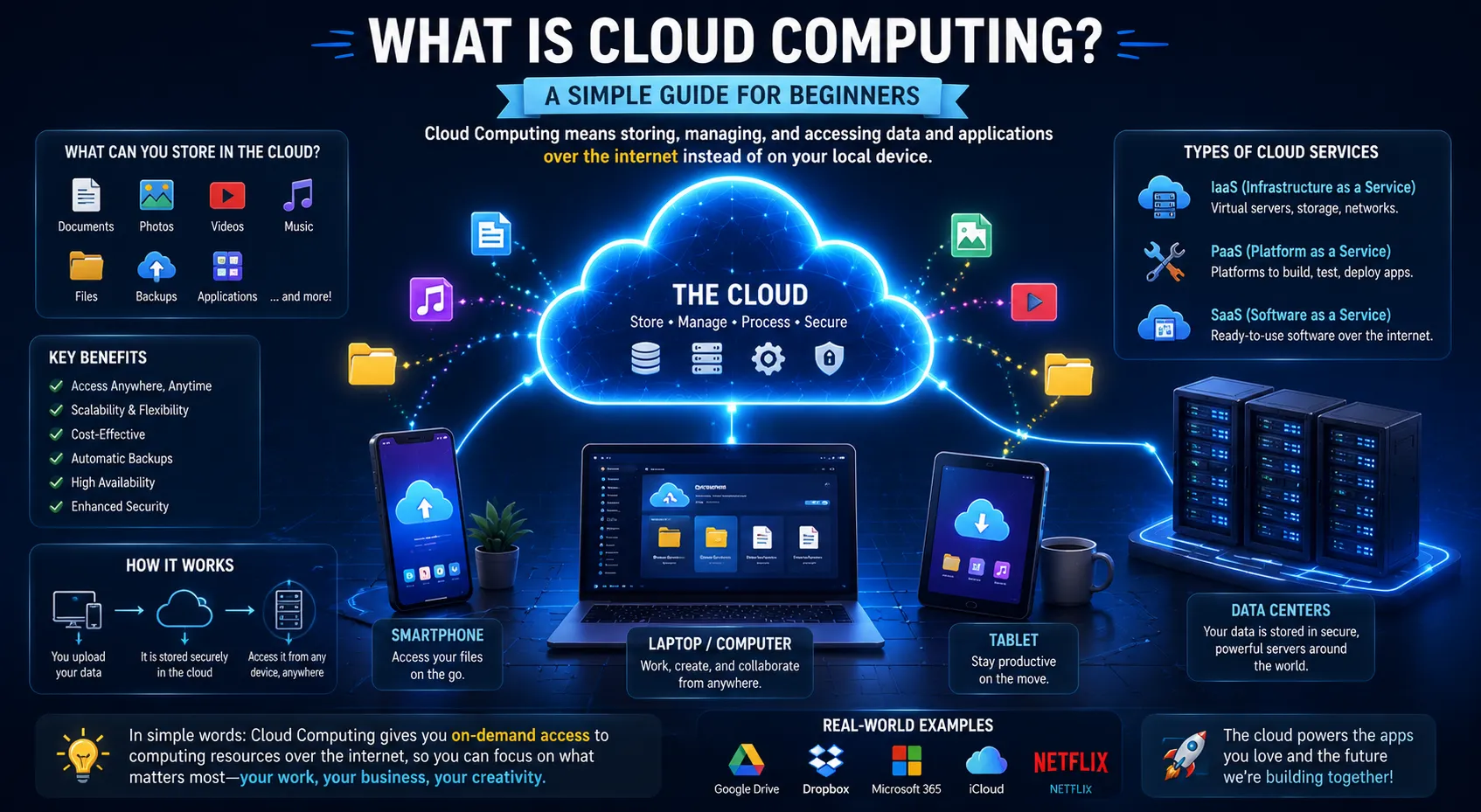
Cloud computing simply means using the internet to access computing resources — such as storage, servers, databases, networking, analytics, and software — instead of storing everything on a personal device.
These resources are managed in huge, secure data centers operated by companies like AWS, Microsoft Azure, and Google Cloud. Because of this, you can access your files or applications from any device, anywhere in the world.
A simple way to imagine it:
You don’t need to carry a USB drive or hard disk anymore — your files live in the cloud, always available and easy to access.
How Cloud Computing Works (Simple Explanation)
Behind every cloud service is a massive global network of high-performance servers. These servers:
- Store your data
- Process your tasks
- Deliver results instantly
For example, when you open Google Docs, the document isn’t stored on your laptop. It’s saved and processed on Google’s cloud servers, which is why you can open it from your phone, tablet, or any computer.
This design makes cloud computing extremely flexible, scalable, and reliable.
Why Cloud Computing Matters Today
As businesses and individuals handle more data than ever before, storing everything locally becomes expensive and complicated. Cloud computing solves this with powerful advantages:
Scalability
Need more storage or power? Expand instantly — no hardware required.
Cost Efficiency
You pay only for what you use, making it ideal for startups and small businesses.
Global Accessibility
Work from anywhere with an internet connection.
Automatic Updates
Cloud providers manage updates, backups, and security patches.
High Security
Modern cloud services use encryption, firewalls, and AI-driven threat detection.
Because of these benefits, industries like healthcare, finance, education, retail, and IT heavily depend on cloud solutions.
Major Cloud Service Categories
Understanding the three main service models helps you recognize what type of cloud service you’re using.
1. Infrastructure as a Service (IaaS)
Provides virtual hardware like servers and storage.
Use case: Hosting apps, websites, and large databases.
Examples: AWS EC2, Azure Virtual Machines.
2. Platform as a Service (PaaS)
Provides a ready-made platform for developers to build, test, and deploy applications.
Examples: Google App Engine, Heroku.
3. Software as a Service (SaaS)
Provides ready-to-use software apps over the internet.
Examples: Zoom, Gmail, Canva, Salesforce.
Cloud Deployment Models
1. Public Cloud
Available to multiple users over the internet.
Examples: AWS, Azure, GCP.
2. Private Cloud
Used by a single organization.
Common in banks, government sectors, and large enterprises.
3. Hybrid Cloud
A combination of public and private cloud.
Ideal for organizations needing security + flexibility.
Real-Life Examples of Cloud Computing
You interact with cloud computing every day:
- Netflix and Prime Video → streaming powered by cloud servers
- Google Drive and Dropbox → cloud-based storage
- Instagram and Facebook → media stored and delivered from the cloud
- Ola/Uber → real-time ride and GPS data
- Internet banking → secure cloud infrastructure
Cloud computing makes these services fast, reliable, and available 24/7.
Cloud Computing in the Workplace
The shift toward remote and hybrid work has made cloud computing essential. Modern companies rely on:
- Google Workspace & Microsoft 365 for collaboration
- HubSpot & Salesforce for CRM
- Cloud security tools for monitoring systems
- Cloud storage for managing huge datasets
This shift has created strong demand for skilled cloud professionals across the world.
Who Should Learn Cloud Computing?
You don’t need a technical background to start learning cloud basics. Cloud computing is ideal for:
- Students exploring tech careers
- IT professionals upgrading their skills
- Developers building modern applications
- Non-tech professionals seeking digital skills
- Business owners looking for scalable solutions
Career Opportunities in Cloud Computing
Cloud professionals are among the most in-demand and well-paid in the tech industry. Popular job roles include:
- Cloud Engineer
- DevOps Engineer
- Cloud Security Specialist
- Cloud Solutions Architect
- Data Engineer
- Site Reliability Engineer (SRE)
- Cloud Administrator
These roles offer exciting growth, global opportunities, and future-ready skills.
Conclusion
Cloud computing has transformed the way we store, manage, and access data. It enables faster technology, smarter workplaces, and seamless digital experiences.
For beginners, understanding cloud fundamentals opens the door to one of the most promising fields in the tech world.
If you’re looking to start your journey or build strong cloud foundations, Aryu Academy provides the right guidance and structured learning path to help you grow.