Introduction
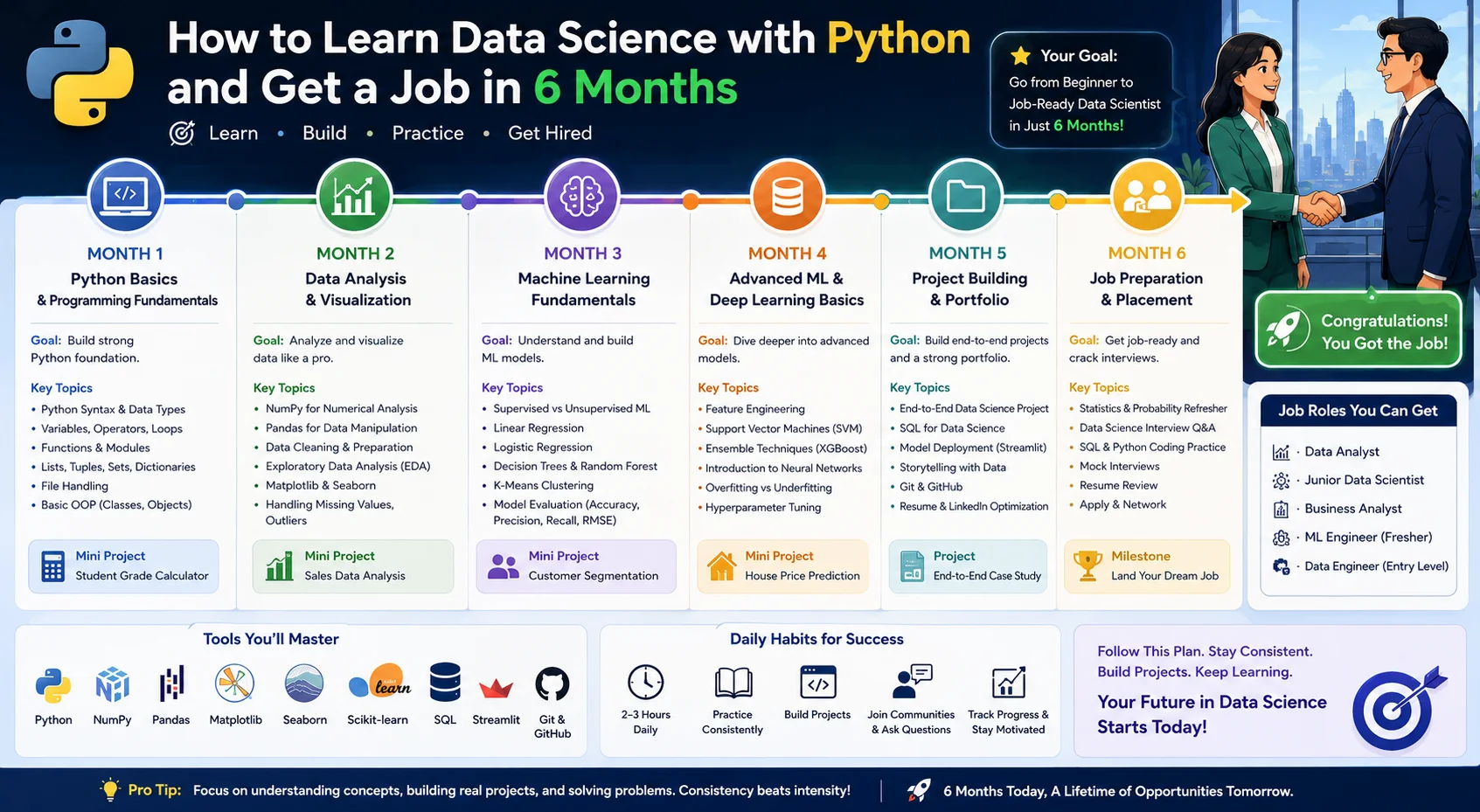
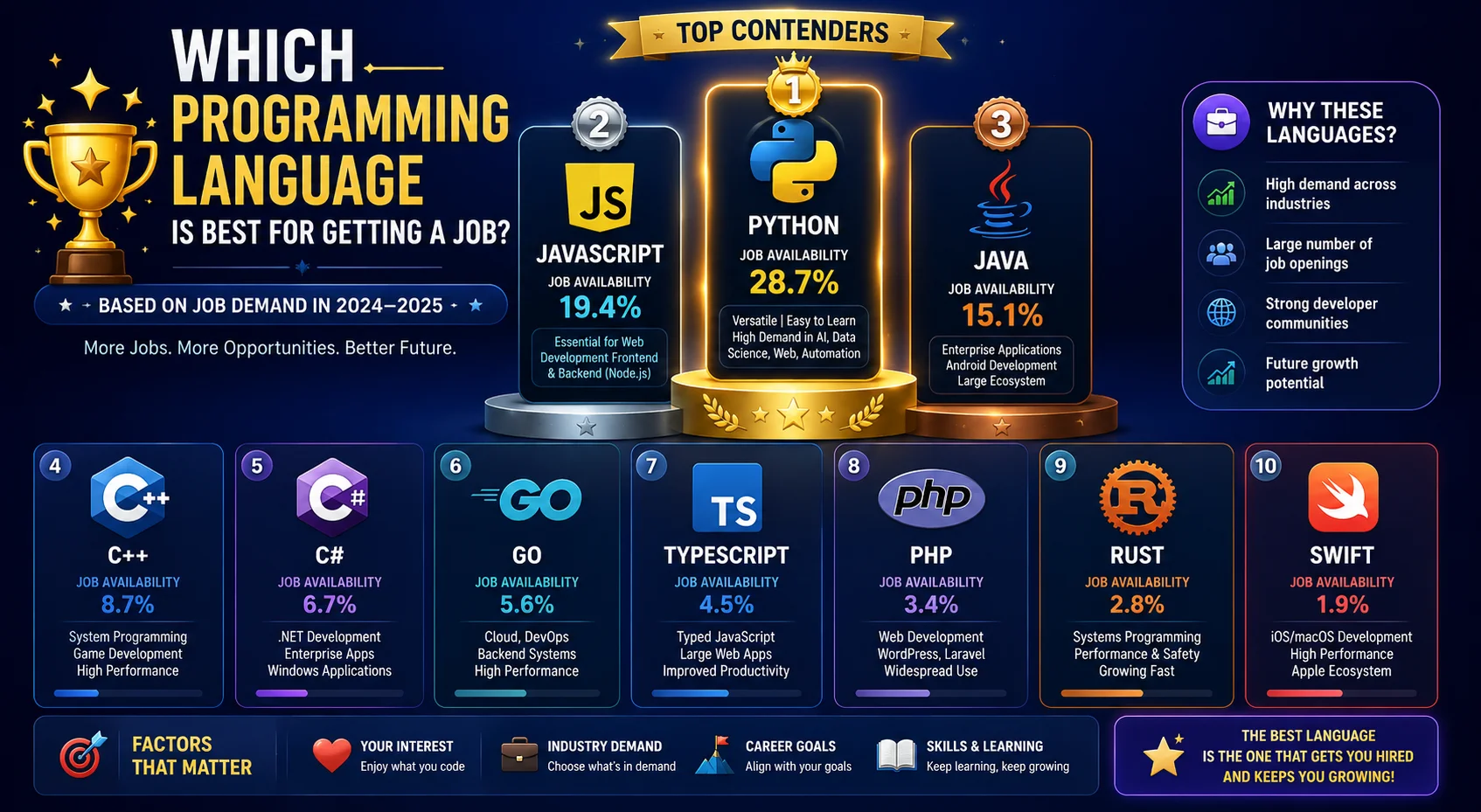
Python programming is a great starting point for anyone who wants to learn coding. Its simple syntax, readable structure, and wide range of applications make it suitable for students, freshers, and professionals looking to develop technical skills. Whether you want to become a software developer, explore data analytics, or understand artificial intelligence, learning Python can help you build a strong programming foundation.
If you are new to coding, you do not need advanced technical knowledge to begin. With consistent practice, a clear learning plan, and hands-on projects, you can gradually understand programming concepts and apply them to real-world problems. In this guide, you will learn what Python is, why it is useful, the basic concepts to study, and how to start your coding journey.
What Is Python Programming?
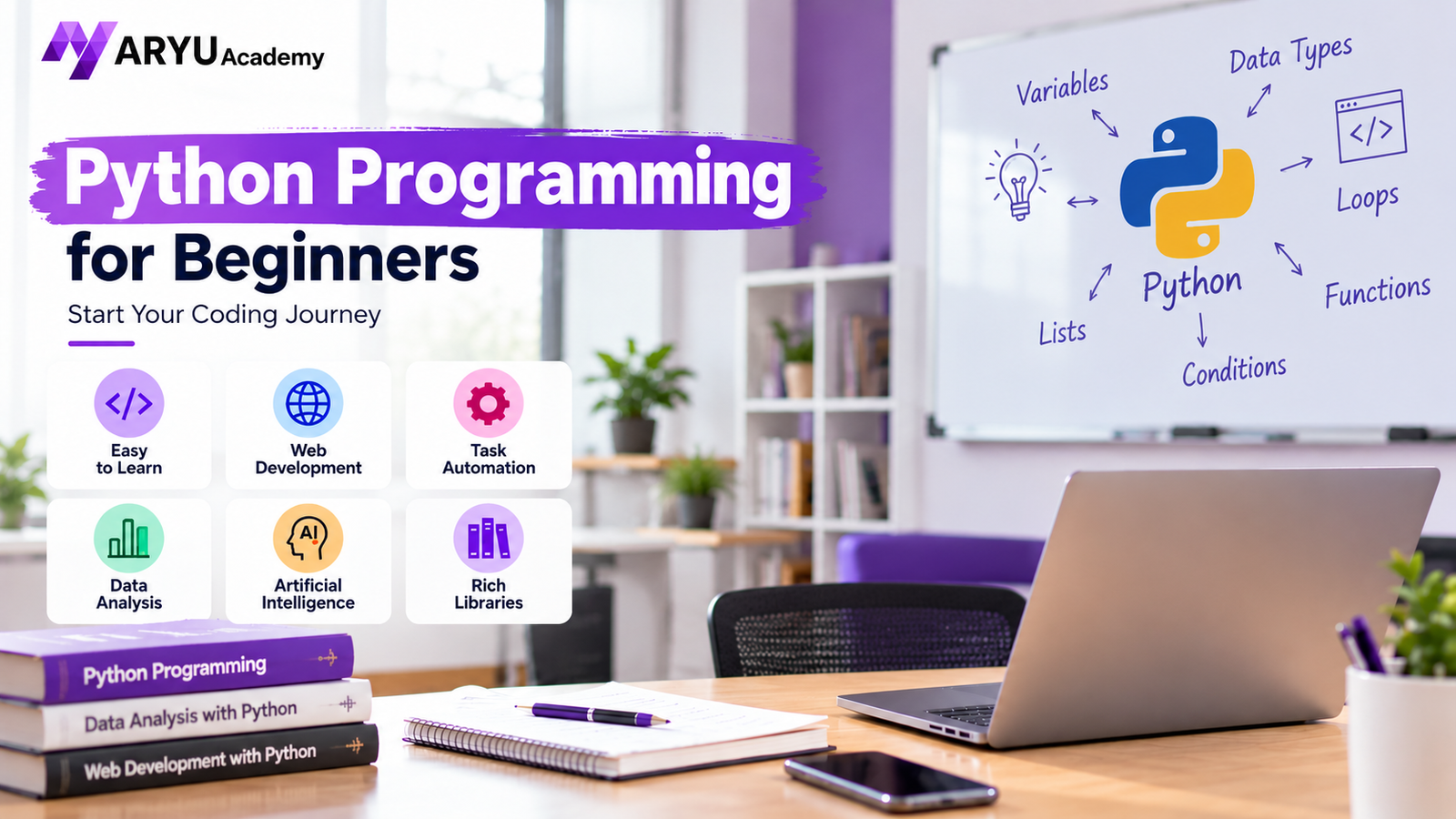
- Easy to Learn: Python has simple, readable syntax that makes it suitable for beginners. It helps learners understand programming concepts without dealing with complicated code.
- Web Development: Python is used to build websites, web applications, and backend services. Frameworks such as Django and Flask help developers create web applications efficiently.
- Task Automation: Python helps automate repetitive tasks such as file management and data processing. Automation reduces manual effort and saves time.
- Data Analysis: Python is widely used to process, organise, and analyse data. Libraries such as Pandas and NumPy help developers work with large datasets.
- Artificial Intelligence: Python supports artificial intelligence and machine learning development. It provides tools and libraries for building predictive models and intelligent applications.
- Rich Libraries: Python offers a wide range of libraries and frameworks for different programming tasks. These resources help developers implement features without writing every component from scratch.
Why Should Beginners Learn Python?
1. Easy-to-Understand Syntax
Python code often resembles simple English instructions. For example, the following program displays a message on the screen:
print(“Hello, World!”)
This small program introduces you to writing and executing code without requiring complex setup or advanced knowledge.
2. Wide Range of Applications
- Web development: Creating web applications and backend services.
- Data analytics: Processing datasets and identifying patterns.
- Artificial intelligence: Developing machine learning models and AI applications.
- Automation: Automating repetitive computer-based tasks.
- Software development: Building scripts, tools, and applications.
3. Suitable for Different Learning Backgrounds
Students, recent graduates, and professionals from non-IT backgrounds can start learning Python without necessarily having prior programming experience. The key is to begin with basic concepts and progress towards more challenging exercises.
However, becoming proficient requires regular practice, problem-solving, and a willingness to learn from mistakes.
Basic Python Concepts Every Beginner Should Learn
Before moving to advanced topics, it is important to understand the fundamental building blocks of Python programming.
1. Variables and Data Types
Variables store information that a program can use. Python supports different data types, including integers, floating-point numbers, strings, and Boolean values.
For example:
name = “Kumar”
age = 21
height = 166.5
is_student = True
Here, the variables store a name, age, height, and a Boolean value. Understanding variables and data types helps you manage information within a program.
2. Operators and Expressions
Operators allow you to perform calculations and compare values. Arithmetic operators include addition, subtraction, multiplication, and division.
a = 10
b = 5
print(a + b)
print(a * b)
The output is 15 and 50. Practising operators helps you understand how programs process information.
3. Conditional Statements
Conditional statements allow a program to make decisions based on specific conditions.
age = 18
if age >= 18:
print(“Eligible”)
else:
print(“Not eligible”)
This program checks whether the age is at least 18. Learning conditions helps you create programs that respond differently to different inputs.
4. Loops
Loops allow you to repeat instructions without writing the same code multiple times.
for number in range(1, 6):
print(number)
This program displays numbers from 1 to 5. Loops are useful when working with lists, processing data, and performing repetitive tasks.
5. Functions
Functions are reusable blocks of code designed to perform specific tasks. They help organise programs and reduce repetition.
def greet(name):
print(“Hello,”, name)
greet(“Kumar”)
This example defines a function that displays a greeting. As you progress, you can use functions to organise larger programs into smaller, manageable parts.
How to Start Learning Python from Scratch
A structured learning plan can make Python easier to understand. Instead of jumping directly into advanced topics, focus on developing your skills step by step.
Step 1: Set Up Your Learning Environment
Install Python from the official Python website or use a beginner-friendly online coding environment. Practise running simple programs to understand how code is written and executed.
Step 2: Understand Programming Fundamentals
Start with variables, data types, operators, conditional statements, loops, and functions. Spend time writing small programs for each concept rather than only reading explanations.
Step 3: Practise Problem-Solving
Solve beginner exercises involving calculations, string manipulation, conditions, and loops. Regular coding practice helps you recognise patterns and develop logical thinking.
Step 4: Work on Beginner Projects
Apply what you learn by building small projects. Projects help connect individual programming concepts and give you practical experience.
Step 5: Explore Advanced Topics Gradually
Once you are comfortable with the basics, explore object-oriented programming, file handling, exception handling, modules, and libraries. You can then choose a specialisation based on your interests.
Beginner-Friendly Python Projects to Practise
- Calculator: Perform basic arithmetic operations using user input.
- Number guessing game: Use loops and conditional statements to create a guessing game.
- To-do list: Practise storing, displaying, and managing tasks.
- Quiz application: Use questions, answers, and scores to build an interactive quiz.
- Expense tracker: Record expenses and calculate total spending using basic Python data structures.
Begin with one project and improve it gradually. For example, you can add input validation, save information to a file, or improve the user interface as your skills develop.
Career Opportunities After Learning Python
Python Developer: Develops applications, scripts, and software solutions using Python. Knowledge of programming concepts, databases, and frameworks is useful for this role.
Backend Developer: Builds the server-side functionality of websites and web applications. Python frameworks such as Django and Flask help developers manage application logic and data.
Data Analyst: Uses Python to organise, process, and analyse datasets. Skills in Pandas, data visualisation, and SQL can help identify useful insights from data.
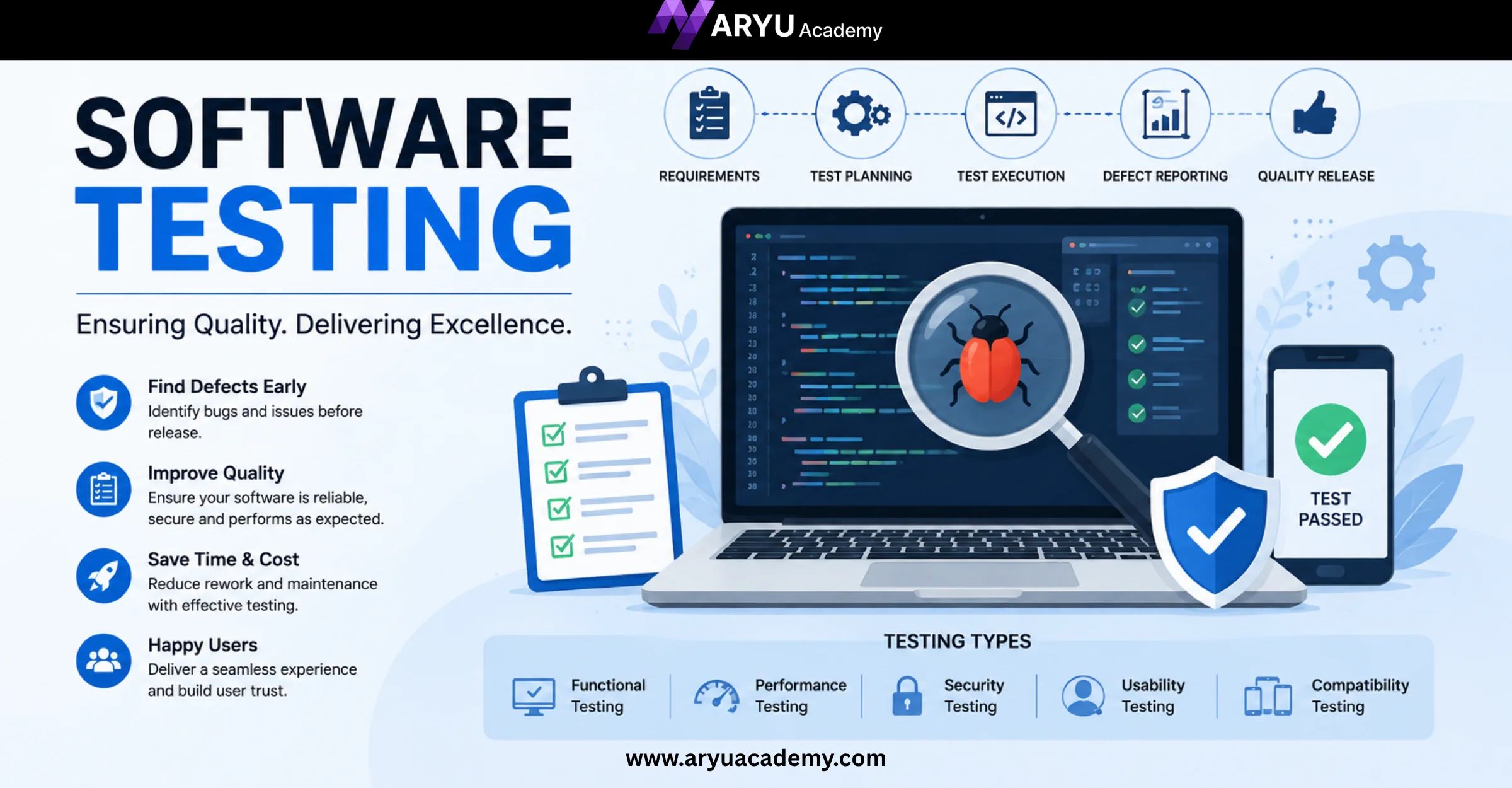
Automation Tester: Uses Python to automate software testing tasks and check application functionality. Knowledge of testing principles and automation tools such as Selenium can be beneficial.
Machine Learning Engineer: Develops and implements machine learning models using data and algorithms. This role typically requires additional knowledge of mathematics, statistics, and machine learning libraries.
Learn Python Programming with Aryu Academy
Starting your coding journey becomes more structured when you have guidance, practical exercises, and a clear learning path. Aryu Academy helps learners explore software training opportunities and develop technical skills through its range of courses. If you are interested in learning Python, explore Aryu Academy’s training options to understand the available course curriculum, practical learning opportunities, and support offered. Choose a programme that matches your current skill level and career goals.
Whether you are a student, fresher, or aspiring software developer, focus on understanding the fundamentals, practising consistently, and applying your knowledge through projects. Visit Aryu Academy to explore the available courses and take the next step towards building your programming skills.
Frequently Asked Questions (FAQs)
1. Is Python easy to learn for beginners?
Yes. Python has readable syntax that makes it a suitable starting point for learning programming. Beginners should start with basic concepts and practise writing small programs regularly.
2. Can I learn Python without prior coding experience?
Yes. You can begin learning Python without previous programming experience. Start with variables, data types, conditions, loops, and functions before moving on to more advanced topics.
3. How long does it take to learn Python basics?
The time required depends on your schedule, learning method, and practice consistency. With regular study, many beginners can understand fundamental concepts within a few weeks, although developing practical proficiency takes longer.
4. Can learning Python help me start a career in IT?
Python can provide a foundation for several IT career paths, including software development, automation, and data analytics. Career readiness also depends on the additional technical skills, projects, and experience required for your chosen role.
5. Where can I learn Python programming in Chennai?
You can explore software training institutes in Chennai, compare their Python curriculum, and review their practical training approach. Aryu Academy is one option to investigate. Before enrolling, check the current course details, project opportunities, fees, and available learner support.