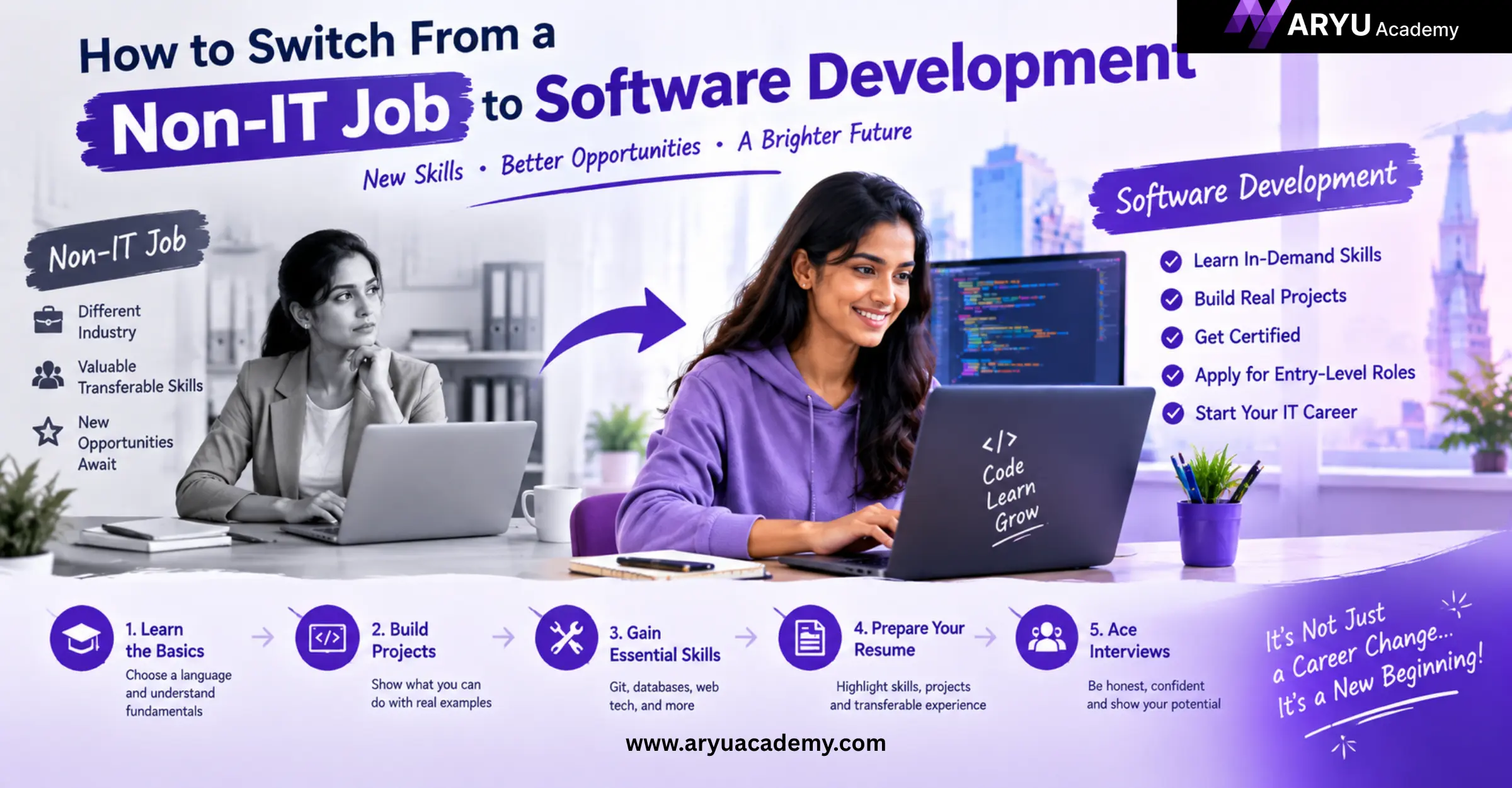
Changing your career from a non-IT job to software development can feel challenging, especially if you have no technical background. But with the right learning plan, practical projects, and consistent practice, it is possible to build a career in software development. You don’t need to learn everything at once. Start with the basics, choose one technology, and gradually build your skills.
Why Switch From a Non-IT Job to Software Development?
The IT industry offers opportunities across software development, testing, web development, data, cloud, and other technology areas. If you enjoy problem-solving and technology, software development can be a practical career path to explore. Your previous job experience can also be useful. Communication, teamwork, customer handling, time management, and problem-solving are valuable skills in IT workplaces.
Start With the Right Programming Language
Choose one programming language instead of trying to learn several languages together.
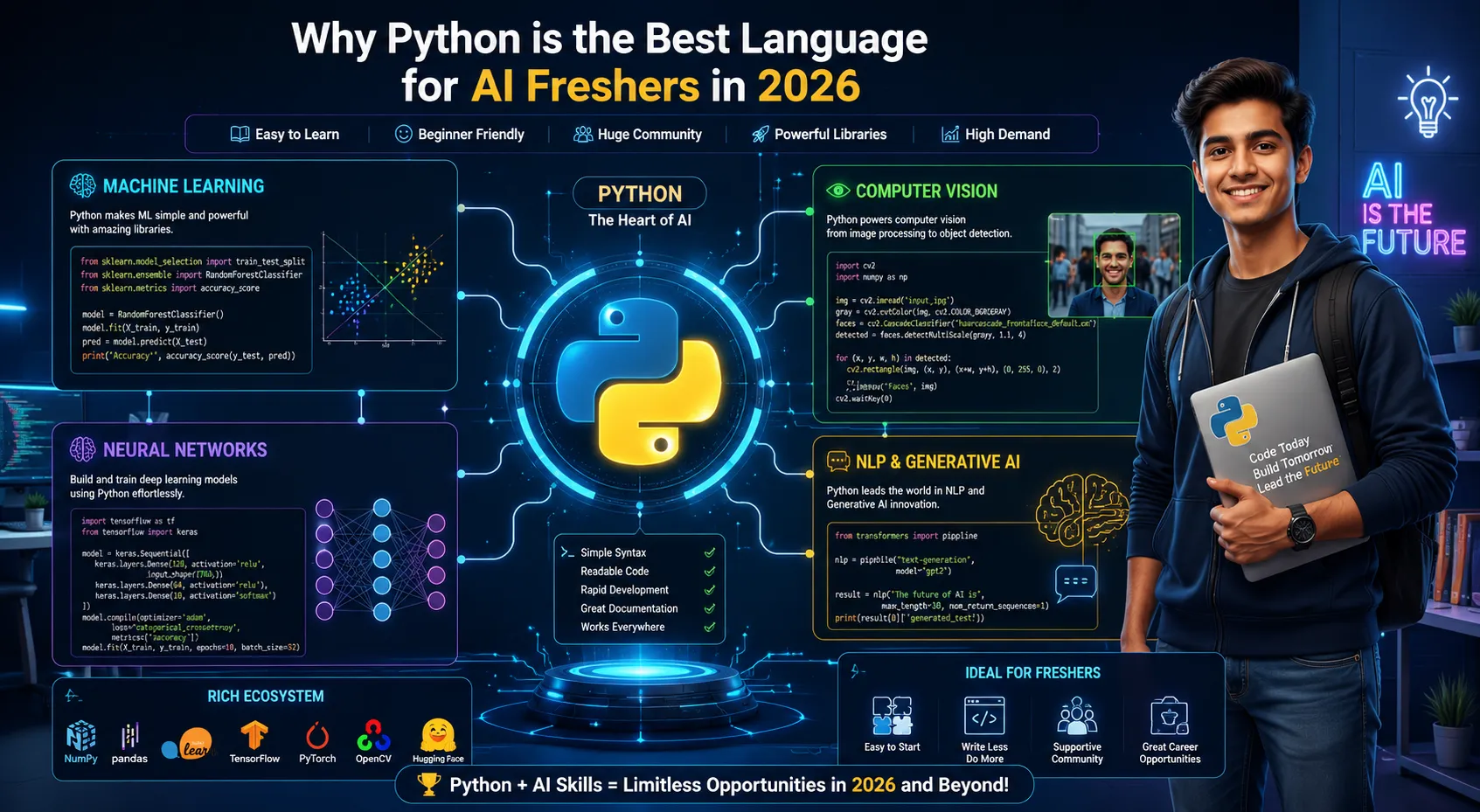
For beginners, popular options include:
- Python
- Java
- JavaScript
Learn the fundamentals first, including variables, conditions, loops, functions, arrays, and object-oriented programming.
Once you understand the basics, start solving small coding problems regularly.
Build Real Projects
Learning theory alone is not enough when you’re trying to move into software development. Projects help you understand how programming is used to solve real problems.
Start with simple projects such as:
- Student management system
- Expense tracker
- E-commerce website
- Employee management system
- To-do application
Add your projects to GitHub and keep your code organized. A practical portfolio can help demonstrate your skills when applying for entry-level roles.
Learn the Skills Employers Look For
Along with programming, learn essential development tools and concepts such as:
- SQL and databases
- Git and GitHub
- HTML, CSS, and JavaScript
- APIs and basic web development
- Debugging and testing
- Basic data structures
You don’t need to become an expert in everything before applying for jobs. Focus on becoming comfortable with the skills required for your target role.
Prepare Your Resume and Interviews
Your resume should focus on your new technical skills, projects, certifications, and transferable experience rather than hiding your previous career.
During interviews, be ready to explain why you changed careers and what you have done to prepare for software development.
A simple and honest explanation works better than trying to hide your career history.
Conclusion
Switching from a non-IT job to software development takes time, but your previous career does not have to define your future. Choose a technology, learn consistently, build practical projects, and prepare for interviews. The goal isn’t to become a developer overnight. It’s to make steady progress until your skills are strong enough to take your first step into the IT industry.
FAQ
Can a non-IT professional become a software developer?
Yes. With structured learning, practical projects, and consistent practice, people from non-IT backgrounds can transition into software development.
Which programming language is best for beginners?
Python and Java are common starting points. The better choice depends on your career goal and the type of development you want to pursue.
Do I need a computer science degree?
Not necessarily. A technical degree can be helpful, but practical skills, projects, and relevant experience can also play an important role when applying for software roles.
How long does it take to switch to software development?
The timeline varies depending on your starting point, learning schedule, and target role. Consistent practice and project building can make the transition more structured.
Is software training useful for career changers?
A structured software training program can help beginners learn in a planned way, practice real projects, and prepare for technical interviews.