Introduction
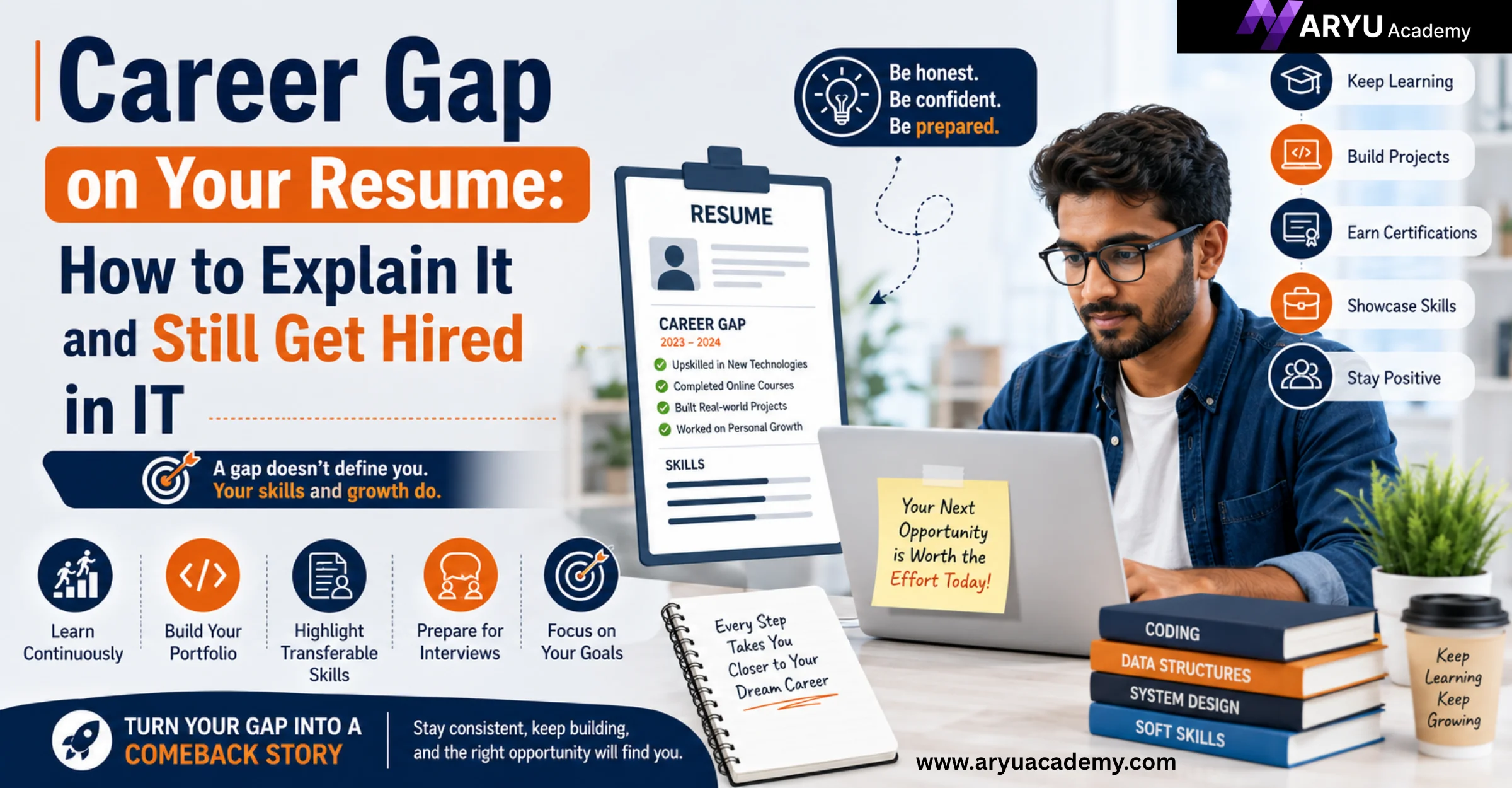
Having a career gap on your resume can sometimes feel like a major disadvantage when you’re applying for an IT job. You may worry that recruiters will question your experience, assume you’ve lost your technical skills, or choose another candidate with a continuous employment history.
But a career gap doesn’t automatically mean your career is over.
People take career breaks for many different reasons. Some take time to pursue education, learn new technical skills, manage personal responsibilities, search for better opportunities, or simply take a break before deciding on their next career move.
What matters most is how you explain the gap and what you did during that period.
In the IT industry, skills can be developed and demonstrated through certifications, projects, internships, freelance work, and practical learning. With the right preparation and a confident approach, you can turn a career gap into a part of your career story rather than something you need to hide.
What Is a Career Gap?
A career gap is a period when a person is not working in a formal full-time job for an extended period.
Career gaps can happen for many reasons, including:
- Higher education or professional training
- Learning new technical skills
- Personal or family responsibilities
- Relocation
- Health or personal circumstances
- Job searching
- Career transition
- Starting a business or freelance work
- Taking a planned career break
A gap becomes less concerning when you can clearly explain what you learned, accomplished, or focused on during that time.
For IT employers, your current skills and ability to contribute to the role are often more important than simply having an uninterrupted employment timeline.
Why Career Gaps Are Common in IT Careers
The technology industry changes quickly. New programming languages, frameworks, cloud platforms, cybersecurity tools, and development practices appear regularly.
Because of this, even experienced professionals need to keep learning.
Someone who has spent a year learning software development, cloud technologies, cybersecurity, data analytics, or another relevant skill may have developed valuable knowledge during their career break.
The key is to show recruiters that your time away from employment did not mean you stopped developing professionally.
How to Explain a Career Gap on Your Resume
The best approach is to be honest and keep your explanation professional.
You don’t need to write a long personal story on your resume. Instead, briefly mention the reason for the gap when appropriate and focus on productive activities during that period.
For example, instead of leaving a blank period, you could highlight activities such as:
Career Break | 2024–2025
- Completed software development training
- Built practical web development projects
- Strengthened programming and database skills
- Completed relevant certifications
- Prepared for a transition into IT
This gives recruiters context and shows that you were actively preparing for your next opportunity.
Focus on Skills You Gained During the Career Gap
One of the best ways to address a career gap is to demonstrate what you learned during that time.
If you’re applying for a software development position, for example, you might highlight:
- Programming fundamentals
- Java, Python, PHP, or JavaScript
- SQL and database management
- HTML and CSS
- Git and version control
- API development
- Testing and debugging
- Problem-solving
For other IT roles, your skill set may include cloud computing, cybersecurity, networking, data analytics, UI/UX, or IT support.
The important thing is to connect your learning directly to the job you’re applying for.
Build Projects to Strengthen Your Resume
Projects can be particularly valuable for candidates returning to work after a career break.
Instead of simply saying that you learned a technology, show what you built with it.
For example, you could create:
- A portfolio website
- Student management system
- E-commerce application
- Task management application
- Expense tracker
- Customer management system
- Data analysis project
- Cybersecurity practice project
Include a short description of each project, the technologies used, and what you personally worked on.
Projects give recruiters tangible evidence that your technical skills are current and practical.
Certifications Can Help Rebuild Confidence
Relevant certifications can also strengthen your profile after a career break.
Depending on your target IT role, you might consider certifications or structured training in areas such as:
- Software development
- Cloud computing
- Cybersecurity
- Networking
- Database technologies
- Data analytics
- Software testing
- Digital technologies
Don’t collect certifications simply to fill your resume. Choose training that matches the position you’re targeting and, whenever possible, combine certification learning with practical projects.
How to Explain a Career Gap During an Interview
The interview is where recruiters may ask directly about your career gap.
The best response is simple, honest, and positive.
A useful structure is:
Reason → What you did → What you learned → Why you’re ready now
For example:
“I took a career break to focus on personal responsibilities. During that period, I also used my time to develop my technical skills through structured learning and practical projects. I am now ready to return to the workforce and apply those skills in an IT role.”
You don’t need to sound apologetic.
A career gap is part of your professional history. Explain it confidently and then bring the conversation back to your current skills and the value you can offer the company.
Highlight Your Transferable Skills
Your previous experience still matters, even if you’re changing careers or returning after a break.
Skills such as:
- Communication
- Teamwork
- Leadership
- Customer service
- Time management
- Problem-solving
- Project coordination
- Analytical thinking
can be valuable in IT roles.
For example, someone moving from customer service into IT support already understands how to communicate with customers and troubleshoot their concerns. Someone transitioning from finance into software development may bring strong analytical and business knowledge.
Your previous career and new technical skills can work together to create a unique professional profile.
Optimize Your Resume for IT Jobs
A career gap doesn’t have to dominate your resume.
Instead, structure your resume around your current capabilities.
A strong IT resume can include:
Professional Summary
Briefly explain your experience, technical skills, career direction, and current goals.
Technical Skills
List relevant programming languages, tools, frameworks, databases, platforms, and technologies.
Projects
Show practical work that demonstrates your abilities.
Certifications and Training
Include relevant courses and certifications.
Previous Experience
Highlight achievements and transferable skills from your earlier career.
Education
Include relevant degrees, diplomas, and professional training.
This approach shifts attention from the gap toward what you can contribute today.
What You Should Avoid
When discussing a career gap, avoid making excuses or providing unnecessary personal details.
Try not to:
- Hide the gap with misleading information
- Invent work experience
- Over-explain personal circumstances
- Apologize repeatedly
- Claim skills you cannot demonstrate
- Fill your resume with unrelated certifications
- Focus entirely on your previous career
Most importantly, never lie about employment dates or experience. Background checks and interviews can expose inconsistencies and damage your credibility.
How to Stay Job-Ready During a Career Break
If you’re currently experiencing a career gap, you can use the time strategically.
Create a simple routine that includes:
Learn: Study technologies relevant to your target role.
Practice: Solve coding problems or technical exercises.
Build: Work on practical projects.
Document: Keep your projects and achievements organized.
Connect: Network with professionals and participate in relevant communities.
Apply: Start applying once you have the foundational skills required for your target positions.
Even small, consistent efforts can make a significant difference over time.
Conclusion
A career gap on your resume doesn’t have to prevent you from getting hired in IT. What matters is how you present your journey, demonstrate your current skills, and show that you’re ready to contribute.
Be honest about your career break, highlight relevant learning and projects, strengthen your technical skills, and prepare a confident explanation for interviews.
Remember, recruiters aren’t only looking at your employment timeline. They want to know whether you have the skills, attitude, and ability to succeed in the role.
Your career may have taken a different path, but that doesn’t mean you’ve fallen behind. With focused learning, practical experience, and a strong resume, you can confidently take the next step toward an IT career.
Frequently Asked Questions
1. Will a career gap affect my chances of getting an IT job?
A career gap can lead to questions during recruitment, but it does not automatically prevent you from getting hired. Demonstrating current skills, relevant projects, certifications, and practical knowledge can strengthen your application.
2. Should I mention my career gap on my resume?
Yes, it’s generally better to be honest about significant gaps rather than trying to hide them. You can briefly explain the period and highlight relevant learning, projects, training, or other productive activities.
3. How should I explain a career gap during an IT interview?
Keep your explanation honest, brief, and positive. Explain the reason for the break, mention how you used the time productively when relevant, and emphasize that you’re now prepared and motivated to return to work.
4. Can certifications help after a career break?
Yes. Relevant certifications can demonstrate that you’ve updated your knowledge. However, certifications are most effective when supported by practical projects and skills related to the job you’re applying for.
5. Can I get an IT job after a long career gap?
Yes. A longer career gap may require additional preparation, but it doesn’t make an IT career impossible. Updating your technical skills, building projects, networking, and applying for suitable entry-level or return-to-work opportunities can help.
6. What should I do during a career gap to improve my IT career prospects?
Use the time to learn relevant technologies, complete practical projects, earn targeted certifications, improve your resume, build a professional portfolio, practice interviews, and stay familiar with developments in your chosen IT field.