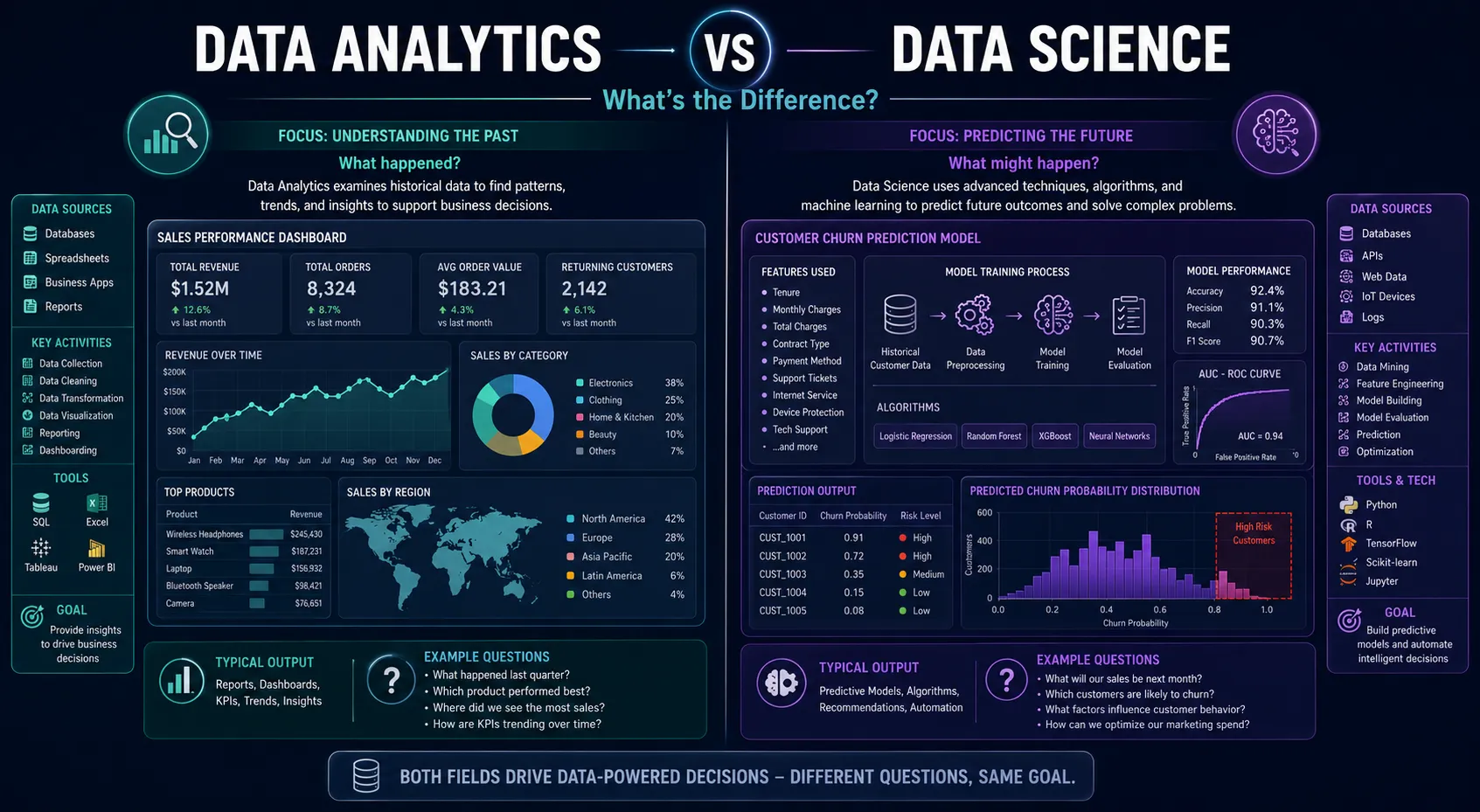
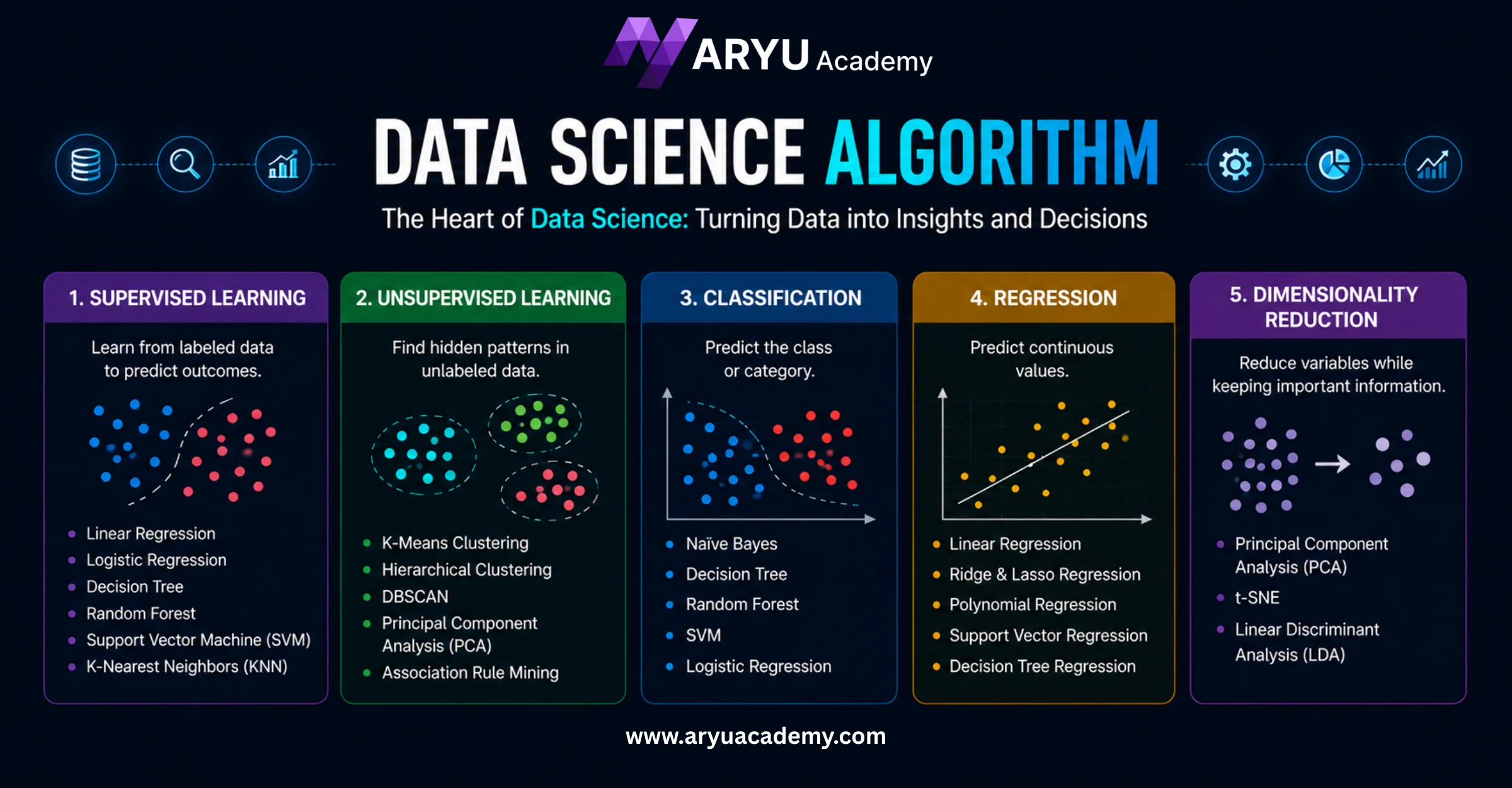
In today’s digital world, data is generated every second through social media, online transactions, mobile applications, healthcare systems, and business operations. However, raw data alone has little value unless it can be analyzed and transformed into meaningful insights. This is where data science algorithms play a crucial role. These algorithms help organizations uncover patterns, predict future outcomes, automate decision-making, and solve complex business problems efficiently.
Whether it’s recommending your favorite movie, detecting fraudulent transactions, or forecasting sales trends, data science algorithms are the driving force behind intelligent systems.
Understanding Data Science Algorithms
A data science algorithm is a set of mathematical and statistical instructions designed to analyze data and identify patterns. These algorithms process large volumes of information and help data scientists make accurate predictions or classifications based on historical data.
Algorithms act as the foundation of machine learning and artificial intelligence. They enable computers to learn from data without being explicitly programmed for every task. By identifying trends, relationships, and anomalies within datasets, algorithms help businesses make informed decisions and improve operational efficiency.
Data science algorithms can be used for various purposes, including prediction, classification, clustering, recommendation systems, and optimization. The choice of algorithm depends on the nature of the data and the problem being solved.
The Future of Data Science Algorithms
The future of data science algorithms is closely tied to advancements in artificial intelligence, cloud computing, and big data technologies. Modern algorithms are becoming more sophisticated, capable of handling larger datasets and generating more accurate predictions.
Emerging trends include automated machine learning (AutoML), explainable AI, deep learning, and real-time analytics. These innovations are making data science more accessible while improving transparency and performance.
As industries continue their digital transformation journeys, data science algorithms will remain at the core of innovation. From healthcare and finance to education and e-commerce, organizations will increasingly depend on intelligent algorithms to solve problems, optimize operations, and create better user experiences.
Conclusion
Data science algorithms are the backbone of modern analytics and artificial intelligence. They enable businesses and organizations to extract meaningful insights from data, automate complex processes, and make smarter decisions. By understanding different types of algorithms and their applications, professionals can leverage the power of data science to drive innovation and achieve long-term success. As technology evolves, these algorithms will continue shaping the future of data-driven decision-making across every industry.