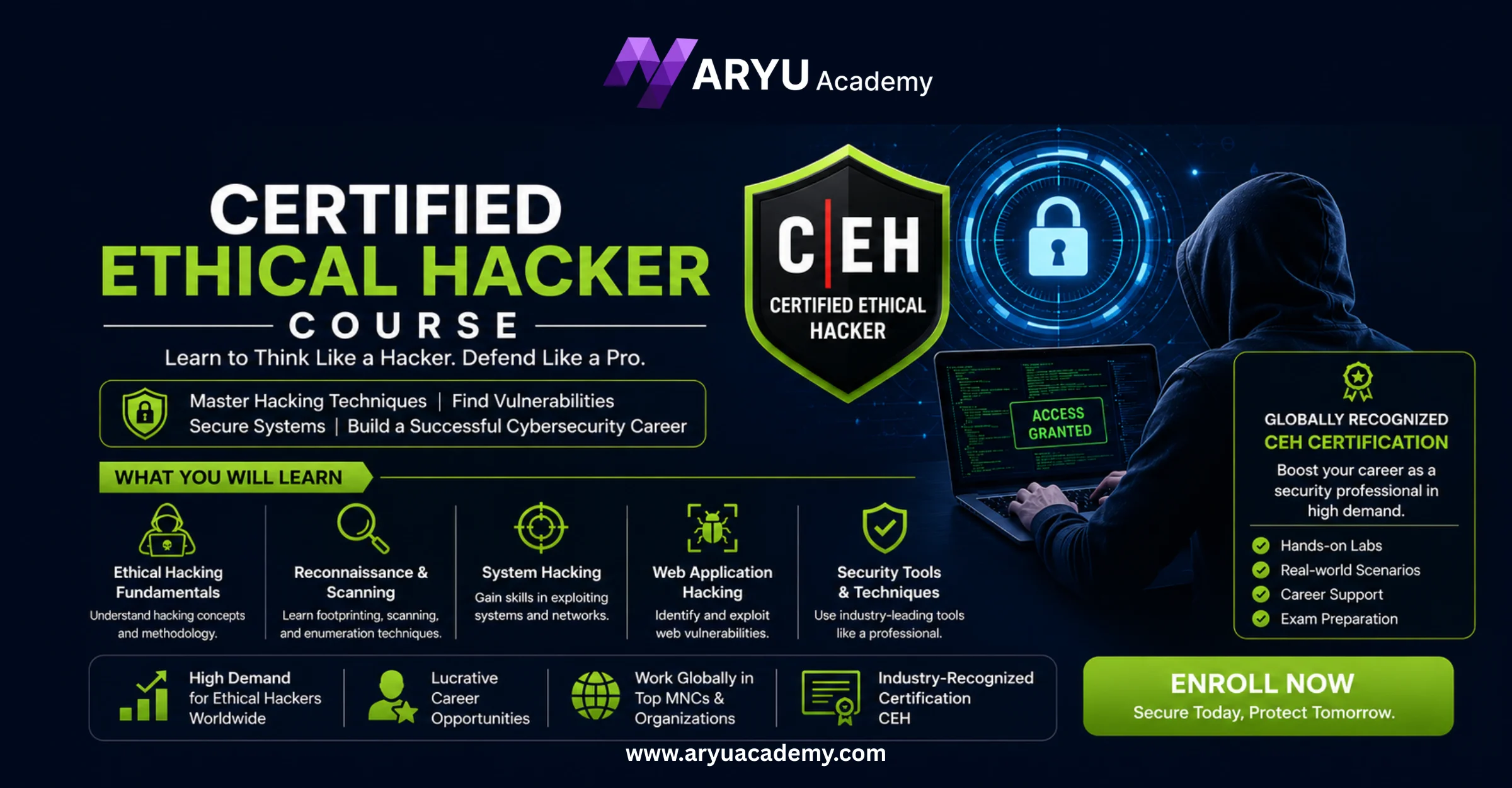
As cyber threats continue to grow across industries, organizations are actively seeking professionals who can identify vulnerabilities before cybercriminals exploit them. This demand has made ethical hacking one of the most exciting and rewarding fields in cybersecurity. The Certified Ethical Hacker (CEH) Course is designed to equip learners with the knowledge and practical skills needed to protect systems, networks, and applications from cyberattacks.
The CEH certification is globally recognized and provides a strong foundation in cybersecurity concepts, penetration testing, vulnerability assessment, and ethical hacking methodologies. Whether you are a student, IT professional, or aspiring cybersecurity expert, this course can help you build valuable skills and open doors to new career opportunities.
What Is a Certified Ethical Hacker Course?
A Certified Ethical Hacker Course teaches individuals how to think and act like a hacker—but with the goal of improving security rather than causing harm. Ethical hackers use the same tools and techniques as malicious hackers to identify weaknesses in systems and recommend solutions before they can be exploited.
The course covers various aspects of cybersecurity, including:
- Ethical hacking fundamentals
- Network security concepts
- Vulnerability assessment techniques
- Penetration testing methodologies
- Malware threats and prevention
- Web application security
- Wireless network security
- Social engineering awareness
- Cloud and mobile security
Through hands-on labs and real-world scenarios, learners gain practical experience in identifying and addressing security vulnerabilities.
Key Skills You Learn in a CEH Course
One of the biggest advantages of a Certified Ethical Hacker Course is its focus on practical cybersecurity skills. Instead of learning only theoretical concepts, students gain hands-on experience with tools and techniques used by security professionals.
Some important skills covered include:
Network Scanning and Enumeration
Learn how to discover devices, services, and potential vulnerabilities within a network environment.
Vulnerability Assessment
Understand how to identify security weaknesses and evaluate risks before they become serious threats.
Penetration Testing
Practice testing systems and applications to uncover vulnerabilities that attackers might exploit.
Web Application Security
Learn common web-based attacks such as SQL injection, cross-site scripting (XSS), and methods to prevent them.
Security Monitoring and Incident Response
Develop skills to detect suspicious activities, analyze security incidents, and respond effectively to cyber threats.
These practical skills prepare learners for real-world cybersecurity challenges and improve their ability to protect digital assets.
Benefits of Earning a Certified Ethical Hacker Certification
The CEH certification is recognized by employers worldwide and is often considered a valuable credential for cybersecurity professionals. Earning this certification can provide several career and professional benefits.
Increased Job Opportunities
Many organizations prefer candidates with cybersecurity certifications because they demonstrate validated technical skills and industry knowledge.
Higher Earning Potential
Certified professionals often qualify for better-paying roles compared to those without recognized certifications.
Industry Recognition
CEH is one of the most respected certifications in the cybersecurity industry and is recognized by government agencies, private companies, and multinational organizations.
Practical Security Knowledge
The course provides hands-on experience that helps learners apply cybersecurity concepts in real-world environments.
Career Advancement
Professionals already working in IT can use CEH certification to transition into cybersecurity roles or move into higher-level security positions.
The certification also demonstrates a commitment to professional development and continuous learning.
Career Opportunities After Completing a CEH Course
Cybersecurity has become a critical priority for organizations across all industries. As a result, professionals with ethical hacking skills are in high demand.
After completing a Certified Ethical Hacker Course, learners can pursue roles such as:
- Ethical Hacker
- Cybersecurity Analyst
- Penetration Tester
- Security Consultant
- Vulnerability Assessment Specialist
- Security Operations Center (SOC) Analyst
- Information Security Specialist
- Network Security Engineer
These roles can be found in sectors such as banking, healthcare, government, education, telecommunications, e-commerce, and technology companies.
With the increasing number of cyber threats worldwide, the demand for ethical hackers is expected to continue growing, making cybersecurity one of the most stable and rewarding career paths.
Why CEH Is a Smart Investment for Your Future
Technology continues to evolve, and so do cyber threats. Organizations need professionals who can proactively identify risks and strengthen security before attacks occur. A Certified Ethical Hacker Course provides the technical expertise and practical experience needed to meet this growing demand.
Whether you are starting your career in IT or looking to specialize in cybersecurity, CEH offers a valuable opportunity to develop in-demand skills, gain industry recognition, and build a strong foundation for long-term career growth.
Conclusion
The Certified Ethical Hacker Course is one of the most popular and respected cybersecurity training programs available today. It equips learners with the knowledge and practical skills needed to identify vulnerabilities, prevent cyberattacks, and protect critical systems and data.
As cybersecurity continues to be a top priority for organizations worldwide, professionals with ethical hacking expertise are becoming increasingly valuable. By completing a CEH course and earning certification, you can enhance your career prospects, increase your earning potential, and position yourself for success in the rapidly growing cybersecurity industry.