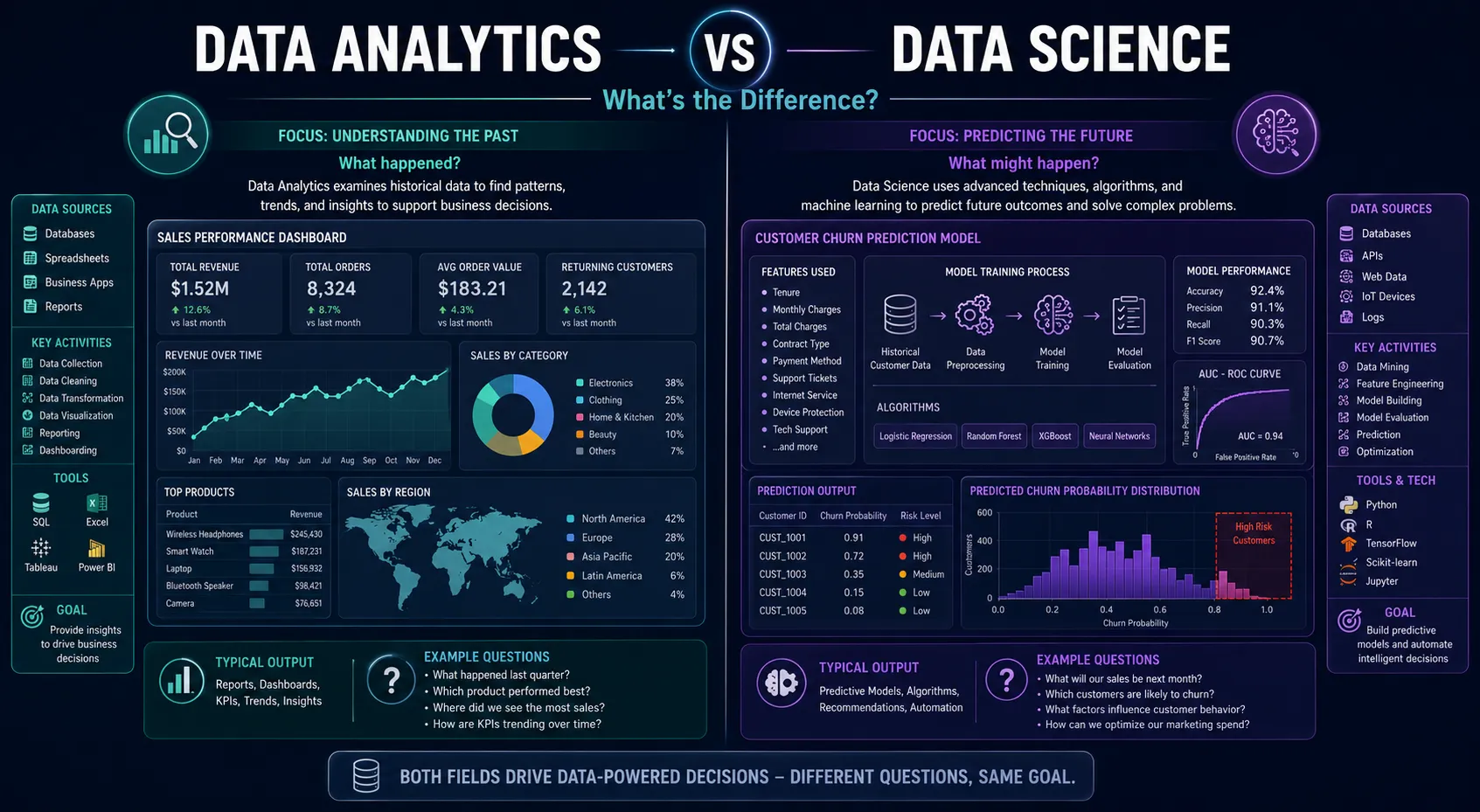
Today, almost every business collects data but the real challenge is making sense of it. That’s where Data Analytics and Data Science come in. People often mix up these two fields, but they actually do different things. Each one has its own role, tools, and career path.
Here’s a clear and easy explanation to help you understand the difference.
What Is Data Analytics?
Data Analytics is simply the process of taking raw data and turning it into useful insights. It helps businesses understand what happened in the past, why it happened, and how they can make better decisions moving forward. Instead of just looking at numbers, data analytics helps convert those numbers into clear, meaningful information that supports smarter strategies and actions.
Tools Used in Data Analytics
To work with data effectively, analysts use a mix of tools that help them clean, analyze, and visualize information.
- Excel – Great for quick calculations and basic analysis.
- SQL – Helps retrieve and manage large amounts of data stored in databases.
- Power BI / Tableau – Used to create interactive dashboards and visuals.
Python (Pandas, NumPy) – Ideal for handling advanced analysis and automating tasks.
These tools make it easier to process large data sets and present insights in a clear, understandable way.
Real-World Applications of Data Analytics
Data analytics is used in almost every industry today because it helps solve real business problems.
- Finding which products are selling the most
- Understanding website traffic and user behavior
- Studying customer buying patterns
- Creating dashboards for quick decision-making
Whether it’s retail, finance, healthcare, or marketing, data analytics helps companies work smarter and grow faster.
Who Should Choose Data Analytics?
If you enjoy working with numbers, spotting patterns, creating reports, or solving problems, data analytics could be a perfect path for you. People who are curious, detail-focused, and interested in understanding how businesses work will find this field both exciting and rewarding.
What Is Data Science?
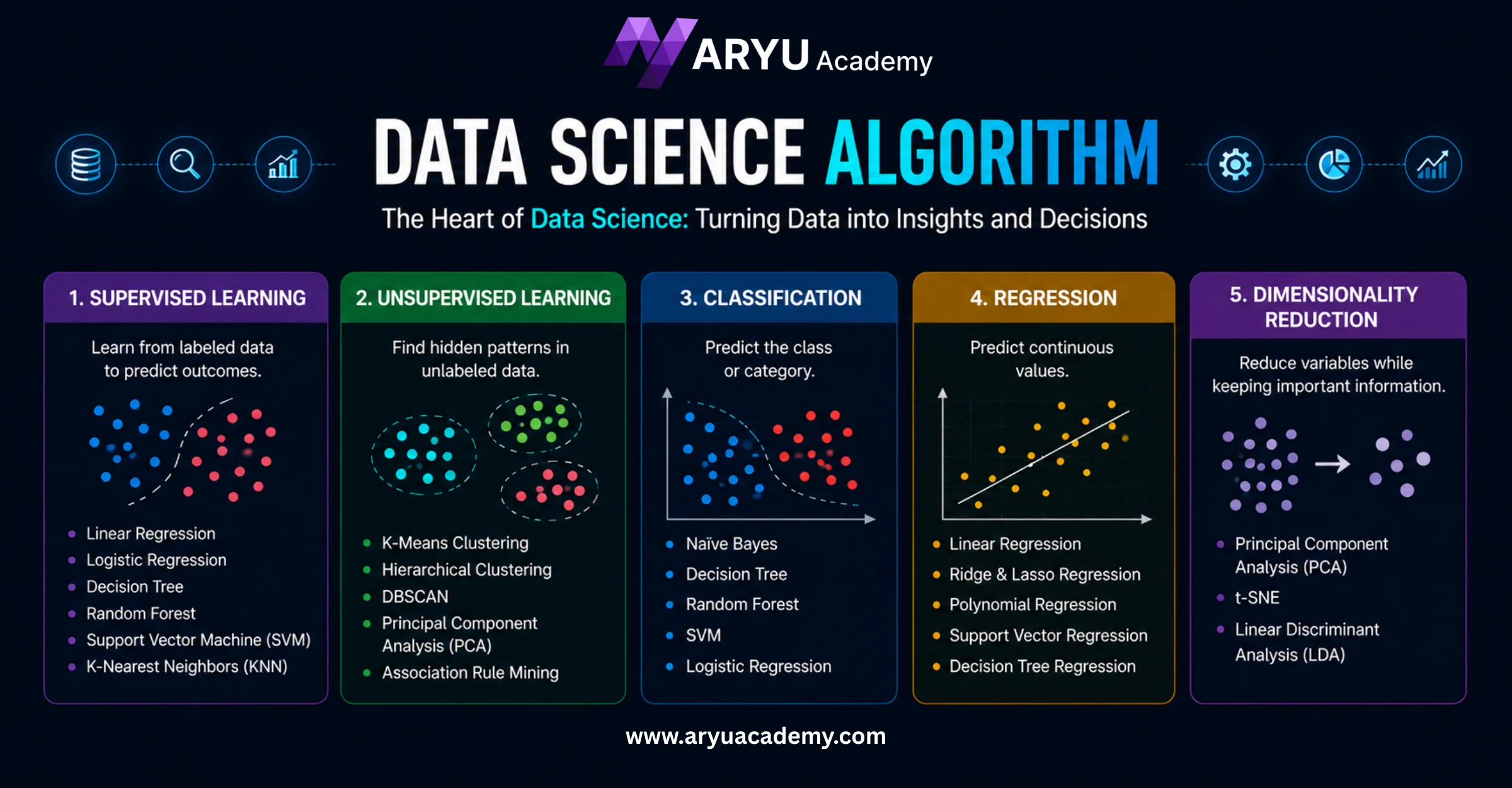
Data Science is a more advanced field compared to data analytics. It focuses on building predictive models, developing machine learning algorithms, and working with large and complex datasets. While analytics explains the past, data science helps predict future outcomes and create intelligent systems that can make decisions automatically. Data scientists work with both structured data (tables, numbers) and unstructured data like text, images, and system logs.
Common Tools Used in Data Science
Data scientists use various tools and technologies to build AI models, process big data, and experiment with algorithms:
- Python (Scikit-Learn, TensorFlow, PyTorch)
- R
- SQL
- Big Data tools like Hadoop and Spark
- Jupyter Notebooks
These tools help in everything from data preprocessing to model training and visualization.
Real-World Applications of Data Science
Data Science powers many technologies we use every day. Examples include:
- Predicting customer churn
- Fraud detection in banking
- Recommendation systems used by Netflix and Amazon
- AI-driven image and speech recognition
These applications help companies automate tasks, improve accuracy, and deliver personalized experiences.
Who Should Choose Data Science?
Data Science is perfect for those interested in AI, machine learning, coding, and advanced mathematics or statistics. If you enjoy solving complex problems and want to work on intelligent systems, this field is a great fit.
Key Differences: Data Analytics vs Data Science
| Feature | Data Analytics | Data Science |
| Goal | Find insights from existing data | Build predictive & intelligent models |
| Focus | Past & current trends | Future predictions & automation |
| Difficulty Level | Beginner–Intermediate | Intermediate–Advanced |
| Skills Needed | SQL, Excel, dashboards | ML, statistics, Python, big data |
| Data Type | Mostly structured | Structured + unstructured |
| Output | Reports, dashboards | Predictive models, algorithms |
Which Career Is Better?
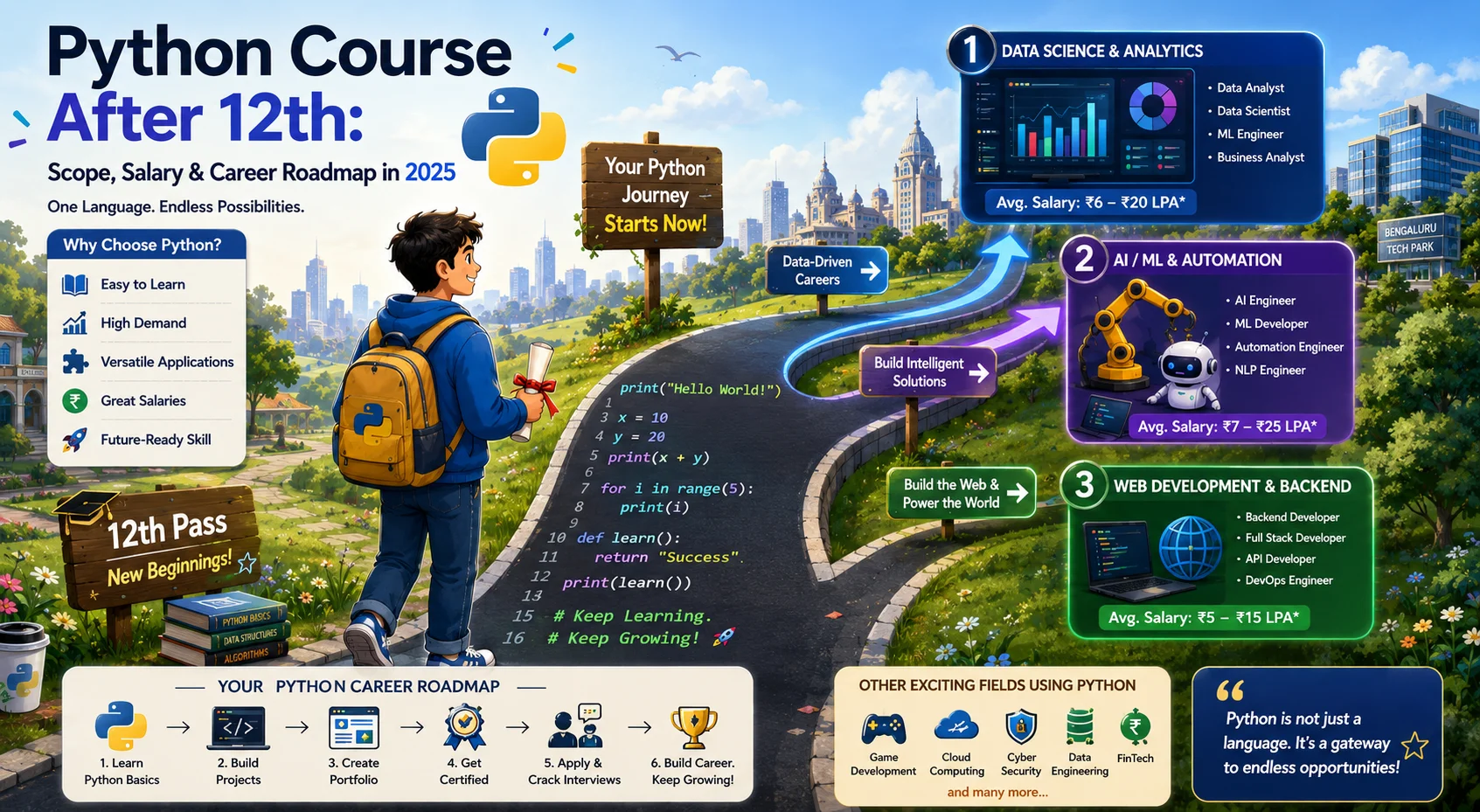
Both Data Analytics and Data Science are in high demand and offer great salary growth. The best choice depends on what you enjoy doing.
- Choose Data Analytics if you like working with business data, creating reports, and building visualizations that help companies make decisions.
- Choose Data Science if you’re interested in machine learning, coding, and building predictive models.
There’s no “better” or “wrong” option—both fields offer strong career opportunities across tech, finance, healthcare, e-commerce, and many other industries.
Conclusion
Data Analytics and Data Science are powerful fields that help companies make smarter decisions. While analytics focuses on understanding what happened, data science predicts what will happen next.
If you’re planning a career in the data world, start with fundamentals and slowly move into advanced concepts. With the right skills, both domains offer a bright future.