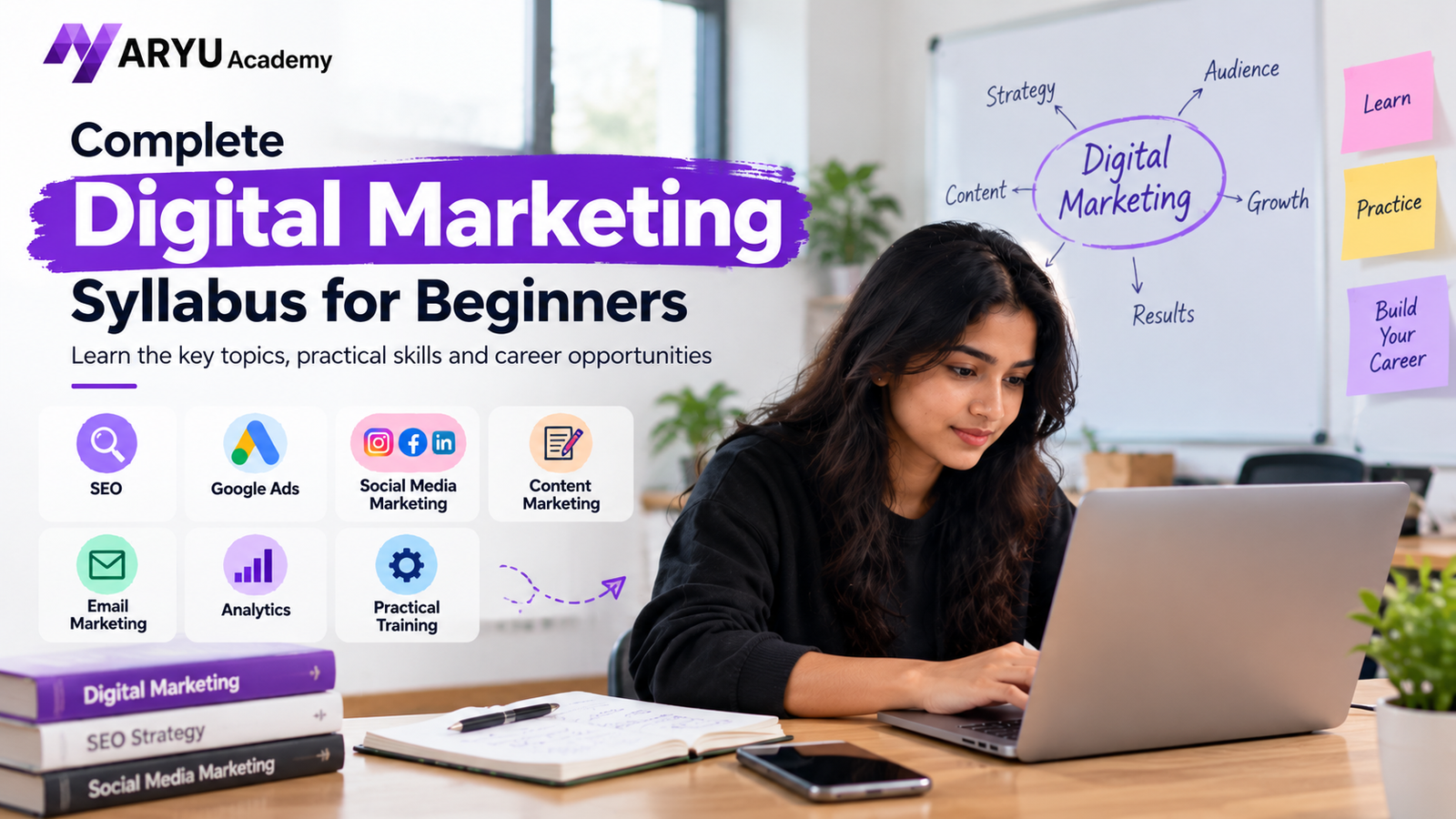
Digital marketing helps businesses reach customers, promote products, and grow their online presence. A Digital marketing syllabus covers essential marketing strategies, tools, and techniques, helping beginners understand the key subjects and skills needed to start their learning journey. It includes important topics such as SEO, social media marketing, Google Ads, content marketing, email marketing, and web analytics. Learning these subjects helps beginners understand how to attract audiences, measure campaign performance, and develop practical digital marketing skills.
What Is a Digital Marketing Syllabus?
A digital marketing syllabus is a structured list of topics covered in a digital marketing course. It includes SEO, social media marketing, paid advertising, content marketing, email marketing, and web analytics ,helping learners understand online marketing strategies and practical skills.
1. Introduction to Digital Marketing
The first module introduces the fundamentals of online marketing and explains how digital channels support business growth.
- Meaning and importance of digital marketing
- Traditional marketing vs. digital marketing
- Types of digital marketing channels
- Understanding target audiences and buyer personas
- Customer journeys and marketing funnels
- Introduction to digital marketing strategies
2. Search Engine Optimization (SEO)
Search engine optimization helps websites improve their visibility in organic search results. It is an important part of the digital marketing syllabus because businesses rely on search engines to attract relevant visitors.
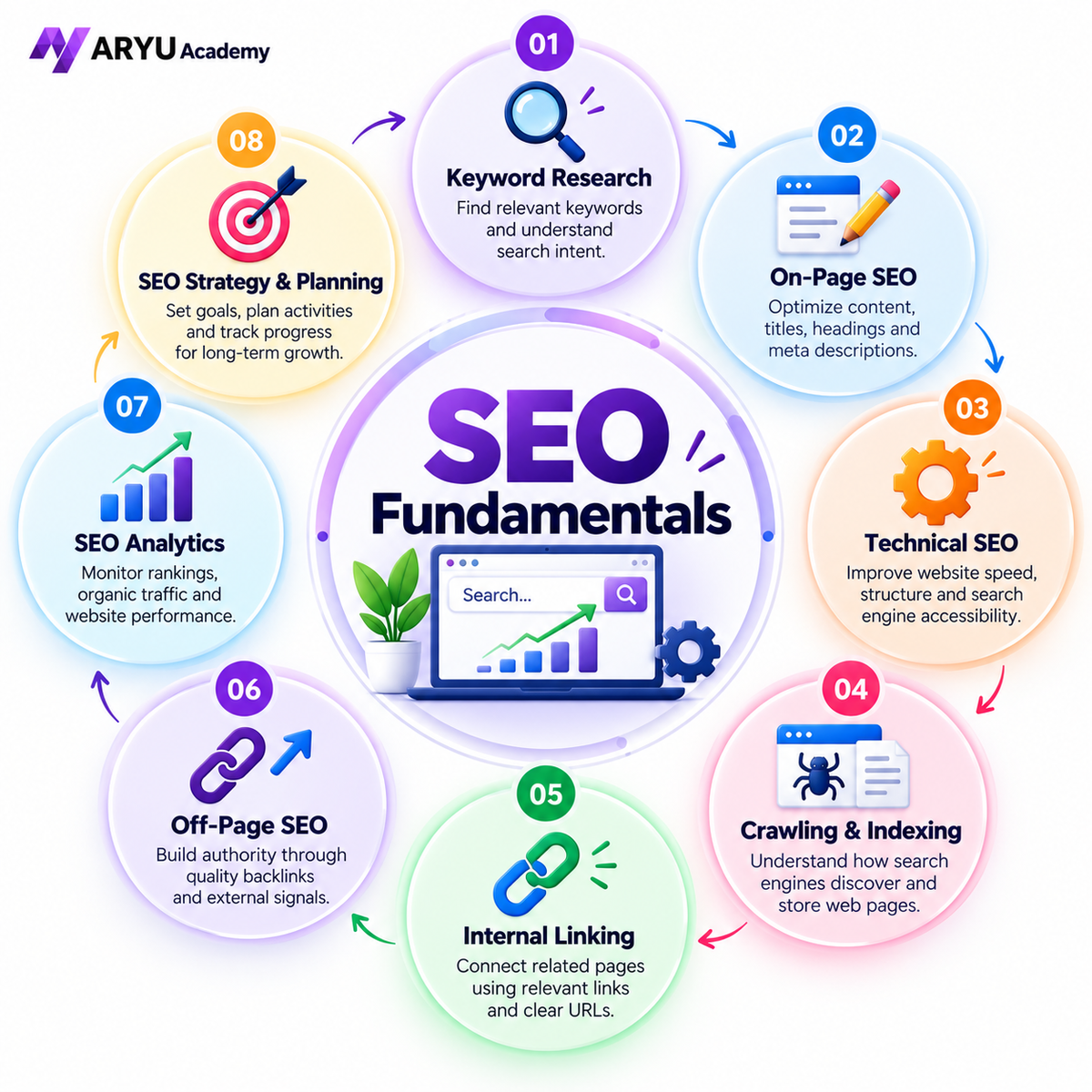
- Keyword Research : Find relevant keywords and understand what users search for.
- On-Page SEO : Optimize page content, titles, headings, and meta descriptions.
- Technical SEO : Improve website speed, structure, and search engine accessibility.
- Crawling & Indexing : Understand how search engines discover and store web pages.
- Internal Linking : Connect related pages using relevant links and clear URLs.
- Off-Page SEO : Build website authority through quality backlinks and external signals.
- SEO Analytics : Monitor rankings, organic traffic, and website performance.
3. Search Engine Marketing and Google Ads
Paid advertising allows businesses to reach potential customers through sponsored search results and other advertising placements. This module explains how paid campaigns are planned, launched, and measured.
- Introduction to search engine marketing (SEM)
- Google Ads campaign structure
- Keyword selection and match types
- Ad copywriting
- Budgeting and bidding basics
- Conversion tracking
- Campaign performance analysis
4. Social Media Marketing
Social media marketing focuses on building brand awareness, engaging audiences, and promoting products or services through social platforms.
- Social media marketing strategies
- Facebook and Instagram marketing
- LinkedIn marketing for businesses
- Content calendars and post planning
- Audience engagement
- Social media advertising fundamentals
- Measuring reach, engagement, and conversions
5. Content Marketing and Copywriting
- Blog writing and article structure
- Website content creation
- SEO-friendly content writing
- Headlines and calls to action
- Content planning and distribution
- Basic storytelling techniques
- Content performance measurement
6. Email Marketing
- Building and managing email lists
- Newsletter creation
- Email subject lines and content
- Audience segmentation
- Email automation basics
- Open rates, click-through rates, and conversions
- Consent and email marketing best practices
7. Website Analytics and Conversion Optimization
- Introduction to Google Analytics 4
- Website traffic sources
- User behaviour and engagement
- Goal and conversion measurement
- Campaign tracking with UTM parameters
- Marketing reports and dashboards
- Conversion rate optimization fundamentals
Practical Training Included in a Digital Marketing Course
- Conducting keyword research for a website
- Optimizing website pages for SEO
- Preparing a content calendar for social media
- Creating a sample Google Ads campaign
- Writing an SEO-friendly blog article
- Analysing website traffic and preparing a performance report
How Long Does It Take to Learn Digital Marketing?
The duration of a digital marketing course depends on the syllabus, training format, and depth of practical learning. Introductory courses may cover the fundamentals in a few weeks, while comprehensive programs may take several months. When comparing courses, consider the number of modules, practical assignments, trainer support, and time available for independent practice. A longer course is not automatically better; the quality and relevance of the learning experience matter too.
Career Opportunities After Learning Digital Marketing
- Digital Marketing Executive: Plans and manages online marketing campaigns to promote a business.
- SEO Executive: Improves website rankings and organic traffic through search engine optimization.
- Social Media Executive: Creates and manages social media content to increase audience engagement.
- Content Marketing Executive: Creates blogs, articles, and other content to attract and inform audiences.
- PPC or Google Ads Executive: Manages paid advertising campaigns to generate traffic, leads, and conversions.
- Email Marketing Assistant: Creates and sends email campaigns to engage customers and promote products or services.
- Digital Marketing Analyst: Analyses marketing data and campaign performance to identify areas for improvement.
Start Your Digital Marketing Journey with Aryu Academy
At Aryu Academy, learners can explore digital marketing concepts through structured training covering SEO, social media marketing, Google Ads, content marketing, and analytics. The course helps beginners understand essential marketing tools, apply their knowledge through practical activities, and develop skills relevant to digital marketing careers.
Ready to build your digital marketing skills? Explore the Digital Marketing Course in Chennai at Aryu Academy and take the next step towards your digital marketing career.
Conclusion
Understanding the Digital marketing syllabus helps beginners identify essential subjects, develop practical skills, and choose the right course. By learning SEO, social media marketing, paid advertising, content marketing, and analytics, you can build a strong foundation for a career in digital marketing.
Frequently Asked Questions (FAQs)
1. What is included in a digital marketing syllabus?
A digital marketing syllabus covers SEO, social media marketing, Google Ads, content marketing, email marketing, and website analytics.
2. Is digital marketing suitable for beginners?
Yes, beginners can learn digital marketing without prior experience by studying the basics and practising essential skills.
3. How long does it take to learn digital marketing?
It may take a few weeks to learn the basics, while comprehensive training can take several months.
4. Can I learn digital marketing after 12th?
Yes, students can start learning digital marketing after completing their 12th standard through beginner-friendly courses.
5. What jobs can I get after learning digital marketing?
You can explore roles such as Digital Marketing Executive, SEO Executive, Social Media Executive, Content Marketing Executive, and Google Ads Executive.